Daniel Kwan and Daniel Scheinert — known as “the Daniels” within the film industry — exploded into the 2010s zeitgeist with their surreal, high-energy music videos. Between 2011 and 2017, the duo directed over a dozen projects for bands such as Foster The People, The Shins, Passion Pit and, most famously, DJ Snake and Lil John’s 2013 hit single: “Turn Down for What.” The Daniels eventually took a crack at feature films and birthed the creative gem Swiss Army Man (Paul Dano, Daniel Radcliffe) before making the 2022 Best Picture-winning absurdist comedy-drama, Everything, Everywhere, All At Once.
The latter is a fever dream from its opening to closing credits. The film follows a Chinese immigrant family (a mother named Evelyn, a father named Wayne, and a daughter named Joy) who own and operate a laundromat. At the onset, the viewer learns of several problems: the family business is being audited by the IRS, Wayne wants to divorce Evelyn, and Joy suffers from crippling depression due in part to her mother not approving of Joy’s non-Chinese girlfriend Becky. All of these issues take a backseat when we’re introduced to a series of new characters (oft resembling the original ones) who have traveled across the multiverse to settle various scores. The plot becomes exceedingly harder to follow from that point on, as Evelyn uncontrollably begins “verse-jumping” in her pursuit to defeat Jobu Tupaki, the film’s antagonist who is another Evelyn from the Alpha-verse. Ultimately, the good guys prevail through a series of unforgettably chaotic events The Wall Street Journal deemed “a Petri dish teeming with [the Daniels’] wildest ideas.”
Kwan and Scheinert began toiling with the concept of the multiverse as far back as 2010; naturally, they were disheartened when a slew of creatives beat them to the punch over the ensuing decade: Season 2 of Rick and Morty (2015), MCU’s Doctor Strange (2016) and Spider-Man: Into the Spider-Verse (2018), to name a few. Nevertheless, the Daniels delved into the foundation of Everything, Everywhere, All At Once by 2018, shot principal photography by January 2020, and wrapped filming — just in the nick of time — by early March of that year.
True to the film’s tone, the original screenplay centered around a professor with undiagnosed attention deficit hyperactivity disorder. While the Daniels ultimately scrapped this idea for the plot described above, Kwan realized through his research that he had been living with undiagnosed ADHD his entire life.
The diagnostic criteria for ADHD within the DSM-5 mirrors the March Madness viewing experience: “difficulty sustaining attention in tasks or play activities” (good luck getting any work done with the tournament on!); “easily distracted by extraneous stimuli” (why focus on one match-up when there are FOUR games on right now?!); “often leaves seat in situations when remaining seated is expected” (this action is taking me out of my seat!); “often unable to play or engage in leisure activities quietly” (woooo, let’s goooo!).
The NCAA tournament is a multiverse in its own right. Over the next three weeks — particularly between this Thursday and Sunday — the madness will be multiplied across space and time to deliver tantalizingly unpredictable drama drenched in perfect pandemonium. Amidst a sea of parody, one thing is certain: there will be Madness, everywhere, all at once.
Season Storylines
You’d make a compelling point if you argued that this season’s on-the-court product is the best it’s been in a long time. Historically high field-goal efficiencies back up this assertion: nearly three times as many teams averaged at least 120 points per 100 possessions compared to any other season over the past 30 years. In fact, Purdue’s current mark of 131.6 points per 100 possessions is the highest ever recorded on KenPom.
Last year, I wrote about how the 2024-2025 season witnessed the highest number of teams attempting 20+ threes per game in the last decade. This season, three point attempts clocked in at a comparable rate, but what changed year-over-year was a greater emphasis on two things: offensive rebounding and two-pointers in the paint. Over 70 teams are securing offensive rebounds on at least 34% of their shot attempts. That’s almost three times as many squads as five years ago. What’s more, over 300 players averaged at least two offensive boards per game this season, which is up from 251 five years ago. As far as that second trend, this chart does a nice job illustrating the gist of it:
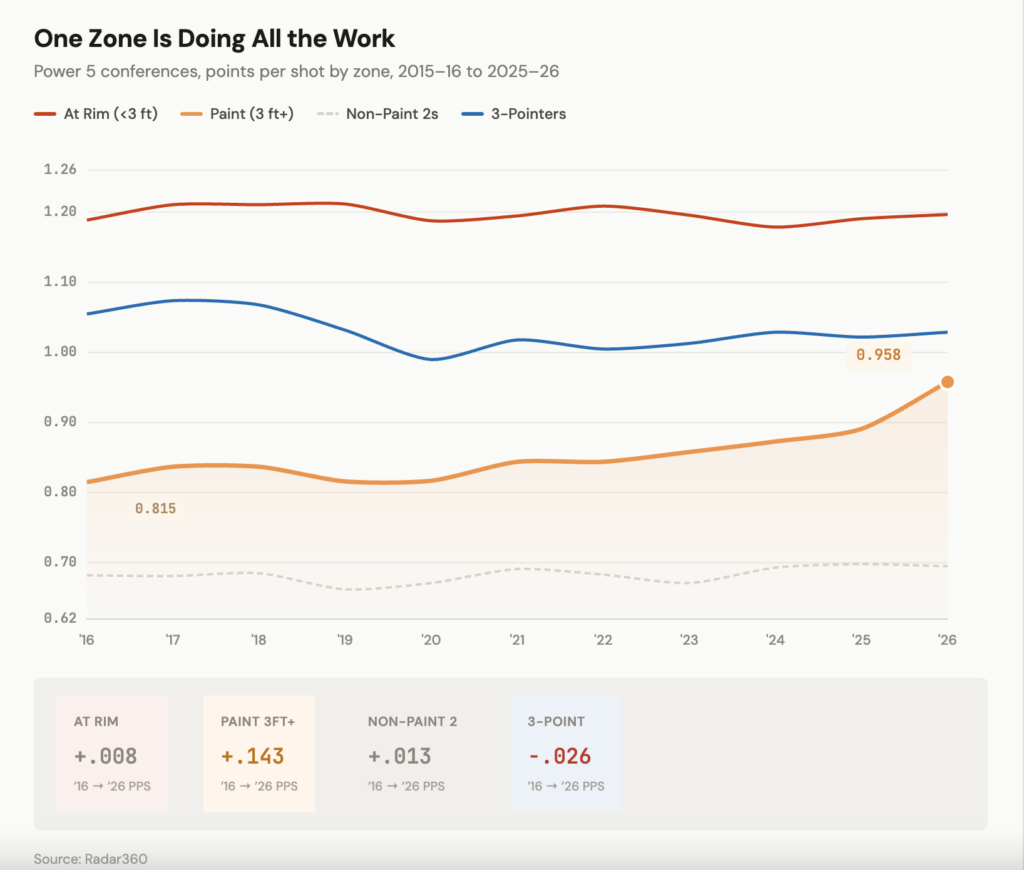
Nowadays, chicks dig the paint two’s from 3 ft and beyond.
A greater commitment to offensive rebounding has major implications in hoops, in part because it pairs well with 3-point shooting. This year, teams have been crashing the glass more often on 3-point shots – especially perimeter players — than ever before. More offensive rebounds are leading to more offensive possessions, and more possessions are now ending with made 3’s than ever before. Shot, rebound, dagger three.
It should come as no surprise that big line-ups have been dominating the sport of late. Move over, Villanova’s three-guard attack; make yourself comfortable, Arizona’s eight-man rotation of 6’6” or taller… UConn’s starting line-up of 6’4”+… Michigan’s three-headed monster of 6’9”+ starters… Florida’s gigantic group of six players 6’9” or taller, Gonzaga’s imposing core of nine guys over 6’9”… and Duke’s entire rotation of 6’4”+. The NBA has been valuing positional size more and more — college basketball is following suit.
Championship DNA
The cream of the crop has been superb this season, considered by many to be the strongest field of contenders since the 2014-2015 bracket. But there’s a difference between a contender and a champion. Champions raise their level of play when the moment calls for it. The evidence is plentiful: Florida’s refusal to die last year, UConn’s double-digit dominance in each of the previous two seasons, Kansas’ relentless second-half Final Four comeback the year before that, Baylor’s early-round KO of undefeated Gonzaga in the title game before that, and Virginia’s Florida-esque nine lives in the tournament before that. When everything’s on the line, champions announce themselves.
There’s usually a method to the tournament madness when it comes to who wins it. Here’s one trend that everyone should pay attention to: 15 of the past 20 national champions were undefeated and ranked in the AP poll at the end of November. This year, teams that fit that bill include Arizona, Michigan, Duke, Iowa State, Vanderbilt, Purdue, Michigan State, and Louisville. Another, more widely known pattern is that every champ since 2004 has been ranked in the Top 12 of the Week 6 AP Poll. The season’s candidates are as follows: Arizona, Michigan, Duke, Iowa State, UConn, Purdue, Gonzaga, Houston, Michigan State, BYU, Louisville, and North Carolina.
What do you get when you combine those two lists? Behold, your tournament champion will be one of these six schools: Arizona, Michigan, Duke, Purdue, Iowa State, or Michigan State.
Freshman Phenoms
It’s hard to talk about this season without zeroing in on the spectacular freshman class. We’ve been blessed with a once-in-a-generation collection of first-year players, headlined by Darryn Peterson (Kansas), AJ Dybansta (BYU), Cameron Boozer (Duke), Darius Acuff (Arkansas), Keaton Wagler (Illinois), Kingston Flemings (Houston), Mikel Brown (Louisville), Caleb Wilson (UNC). Nate Ament (Tennessee), and Arizona’s tandem of Koa Peat and Brayden Burries. These guys put up monster performance after monster performance, week after week. There was one day in particular that eclipsed the rest: on Saturday, January 24th, for the first time ever, three freshmen scored 40 points —- and seven guys finished with over 30.
It’s not so far-fetched to envision each of the first ten picks in the 2026 NBA draft being freshmen. That would of course be another record.
We haven’t seen a freshman win the Final Four Most Outstanding Player since Tyus Jones did it for Duke in 2015. Is this the year that changes?
Bold Prediction
Last year, I was kind enough to tip readers off to the inevitability of all four 1-seeds reaching the Final Four for the second time ever. Spoiler alert: that ain’t happening this time around. Instead, I’ll reveal an equally hot take — The Big Ten takes home a championship title for the first time since Tom Izzo’s Spartans cut down the nets in 2000. I assert this largely because of my belief in Michigan but if the Wolverines let me down, there’s still hope for teams like Purdue, Illinois, Michigan State, Wisconsin, and Nebraska.
Without further ado, here are my thoughts on the 2026 NCAA Tournament Contenders, Pretenders, Sleeping Giants, One-and-Dones and Cinderellas.
Contenders
/kənˈtendərs/ – Teams seeded 1-5 with the best chance of reaching the Final Four
Duke
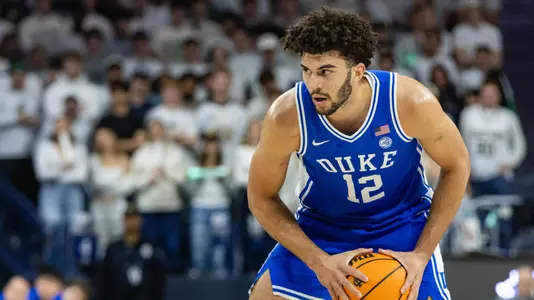
It didn’t take Jon Scheyer long to build Duke back into a perennial contender. Since Coach K’s departure, Scheyer has won three ACC tournament titles in his first four seasons and has taken his team incrementally further in each of the last three NCAA tournaments: the Blue Devils reached the Sweet Sixteen in 2023, the Elite Eight in 2024, and were seconds away from advancing to the championship game in last year’s Final Four classic vs. Houston.
Last year’s Duke team featured a roster for the history books. Five of their players were selected in the NBA draft, including this year’s presumed Rookie of the Year and runner-up, Cooper Flagg and Kon Knueppel. Akin to last season, Scheyer’s 2025-2026 squad once again features the inevitable National Player of the Year in Cameron Boozer. Frankly, Boozer’s had that accolade in the bag for a while now. He averages a gaudy 22.5 points, 10.2 rebounds, and 4.2 assists per game on 56% shooting and became the only D1 player in the past 30 years to record 650+ points, 250+ rebounds, and 100+ assists while shooting north of 50%. Boozer’s 135.3 offensive rating is in fact the highest ever in the KenPom era. So yeah, he’s good.
His teammates ain’t no slouches, either. 6’6” sophomore guard Isaiah Evans — aka the Slim Reaper — is a scouting report nightmare whose 15 points per game off 37% from three and 88% from the line helped elevate the Blue Devils from great to elite. Duke is undefeated when Evans makes at least 3 threes per game; his season average is north of 2.5. Center Patrick Ngongba (who had a health scare leading into the ACC tournament but should be good to go for March Madness) has been another essential cog for Scheyer this season. His 10.7 points, 6.0 rebounds, and 1.1 blocks per contest render him another tough guy to gameplan against on both ends of the floor.
Duke’s team accolades this season are bountiful. They rank 3rd in points allowed per game and clock in at a close 2nd (0.1 behind Michigan) on KenPom’s defensive ratings. They’re also top five in efficiency on the other side of the ball, which helps explain why they own the top scoring margin in the nation. My favorite Blue Devils stat? This team made more free throws than their opponents attempted!
Duke enters the tournament as the #1 overall seed for a reason. They are a Final Four hopeful with or without starting guard Caleb Foster, who fractured his foot a couple weeks ago and aspires to rejoin the team should they make it through their region. That being said, a deep run is no guarantee. Duke’s path will be arduous from the second round on: Ohio State, TCU, St. John’s, and Kansas each have enough talent to keep things competitive; and then, an Elite Eight battle vs. the likes of UConn, UCLA, or Michigan State could be a nail-biter.
Cameron Crazies should take solace in the idea that Duke is theoretically two plays (or 3 seconds) away from being undefeated, having lost to Texas Tech on a last-second free throw and North Carolina on a buzzer-beating three. Their wins over tournament-bound Texas, Kansas, Arkansas, Florida, Michigan State, Louisville (twice), SMU, North Carolina, NC State, Clemson (twice), Michigan, and Virginia (twice) speak for themselves. In the modern era, teams that rely on a star freshman rarely end up cutting down the nets. Anthony Davis breathed this rarified air in 2012, as did Carmello Anthony a decade prior. Is Boozer destined to etch his name on this list? We shall see. In the words of Chris Martin: “Nobody said it was easy.”
Michigan
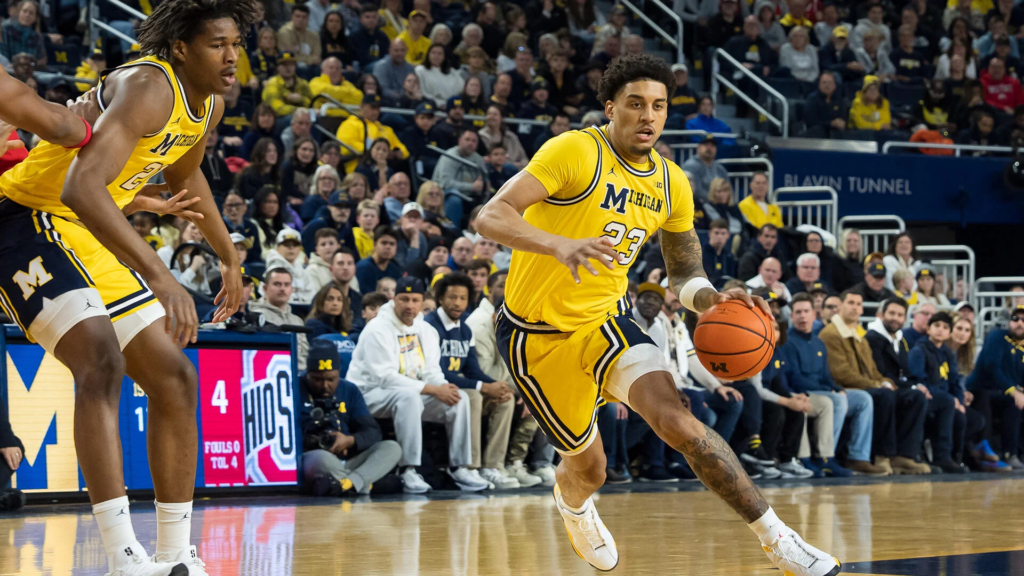
Last season’s Wolverines featured the most dynamic frontcourt in all of college hoops, so dynamic that both players (Danny Wolf and Vlad Goldin) departed for the NBA draft. Incredibly, the collection of big men on this year’s roster is even better. Their frontcourt’s three-headed monster — Yaxel Lendeborg, Morez Johnson, and Aday Mara — is second to none as far as their blend of skill, physicality, and versatility. Lendeborg was anointed the Big Ten Player of the Year for good reason: he stuffs the stat sheet like a Thanksgiving turkey, averaging 14.6 points, 7 rebounds, 3.2 assists, 1.2 steals, and 1.3 blocks off 50% from the floor, 82% from the line and 35% from beyond the arc. He leads the country in plus minus and is fresh off an absurd 30/20/8/5/4 stat line from the Big Ten tournament semis. Johnson and Mara complement Lendenborg with their ability to run the floor and impose their will in the paint — Mara in particular can absolutely wreck an opponent’s interior attack; he’s the tallest player in Michigan history. And I haven’t even gotten to the Wolverines’ slew of trustworthy guards such as Elliot Cadeau, Trey McKenny, Nimari Burnett and Rody Gayle along with their trusty senior wing, Will Tschetter. All of these guys are high-energy, two-way players who aren’t afraid of the moment and can heat up from the field when their number is called.
Michigan’s physicality jumps off the screen. They start five elite defenders who can all switch and adapt to various wrinkles thrown their way. The Wolverines boast the best defensive field goal percentage in the nation and eked out Duke for the top defensive rating at KenPom. Guarding is far from their only calling card, as the team is top ten in the nation across ten tactical categories — they are 4th in offensive points per game, 5th in 2nd half margin, and 8th in true shooting percentage, to name a few.
Dusty May might have the deepest rotation of eight players across the entire tournament landscape. He leads a team full of playmakers whose selfless commitment to making the right play has made them damn near unbeatable for most of this season. Michigan notched seven 40-point wins by the first week of February, the most since 2000-2001 Duke, including shellackings of tournament-bound squads Gonzaga, Villanova, and McNeese. While the Wolverines haven’t been quite as dominant from a scoring margin over the past month, they’ve been consistent enough to suggest their journey is far from finished.
I trust this team to bulldoze their way through the first weekend of the tournament with authority. Their path will get rockier from Sweet Sixteen on, but I think they’ll continue to win the war of attrition en route to a Final Four and — dare I say — Dusty May’s first national championship as a coach.
Arizona
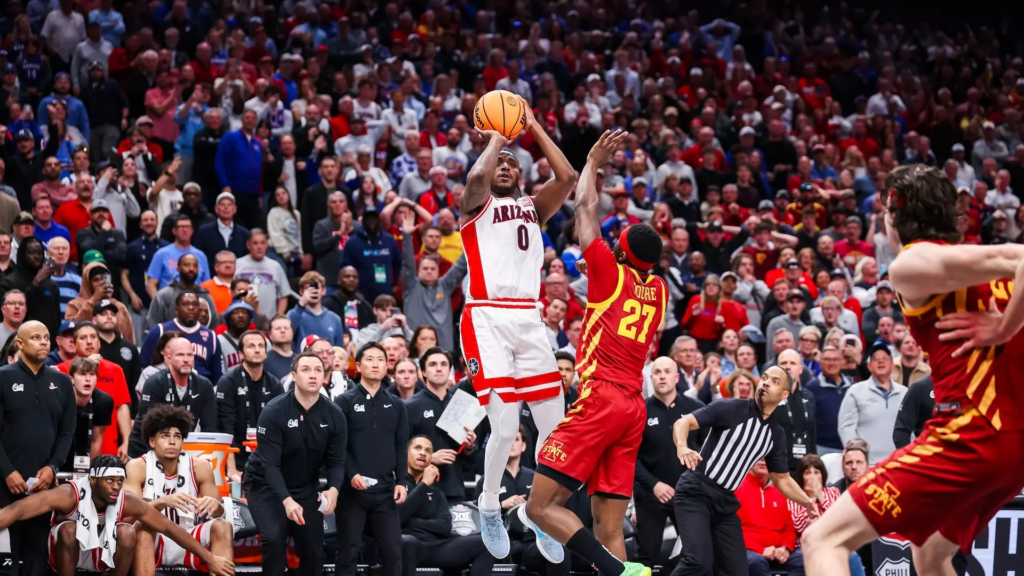
Where do I begin with Arizona? Do I start with their imposing height, physicality and athleticism? Should I initiate by listing their four reliable upperclassmen, who each log significant minutes and boast balanced stat sheets? Or perhaps I could commence by noting that, on top of all that experience, Arizona also features four outstanding freshmen who are destined to join the Association as soon as next year.
Tommy’s Lloyd’s team doesn’t just pass the eye test — they pass the BLINK test! Witnessing the Wildcats execute one possession on each end of the floor is probably enough to see why their ceiling is as high as anyone’s. To elaborate, I’ll tackle those three impressive features in reverse order, starting with their freshman class. Arizona possesses the most talented collection of freshmen (Duke included) in the nation: guard Brayden Burries scores an electric 16 points per game on 50% from the field and 80% from the line; forward Koa Peat contributes a comparable 13.6 points alongside 5.3 rebounds and 2.7 assists; forward Ivan Kharchenkov averages 10.1 points, 4.1 rebounds, 2.3 assists and 1.4 steals; guard Dwayne Aristode, who recently returned from an injury, spreads the floor with reliable perimeter shooting (44%) and stout defense.
Remember: those guys are all freshmen. The Wildcats’ stellar group of upperclassmen including floor general Jaden Bradley (13.3 PPG, 3.6 RPG, 4.5 APG, 1.5 SPG), center Motiejus Krivas (10.5 PPG, 8.1 RPG, 1.0 APG, 1.8 BPG), forward Tobe Awaka (9.4 points and 9.5 rebounds per game) and guard Anthony Dell’Orso (9 points, 2 rebounds, 2 assists on 80% from the line and 33% from three) is just about as reliable as it gets across the college hoops landscape.
Supreme talent, depth, and balance aside, Arizona is a unicorn amidst the field of 68 for another reason: in an era where teams are shooting more 3-pointers than ever before, the Wildcats barely shoot any. The Wildcats took a meager 27% of their shots from three this season, which ranks 363 out of 365 D1 teams. I find this to be a refreshing zag — perhaps in part because I’ve had to live and die by the three as a fan of the Boston Celtics. Tommy Lloyd is no Joe Mazzulla in that regard, but he is undoubtedly one of the sport’s top coaches. Lloyd just set the D1 record for most wins in his first five seasons. Ironically, his 144 wins as of March 14th surpassed Brad Stevens’ previous record of 139.
Arizona undeniably possesses the heart of a champion. They enter the tournament 4th in 2nd-half scoring margin and are tied with Duke for the most wins in the nation (32). I expect Jaden Bradley to pick up right where he left off in the Big 12 tournament — which the Wildcats won thanks to his last-second heroics — but he’ll have more than enough help from his teammates as they surge towards their 5th Final Four in program history.
Houston
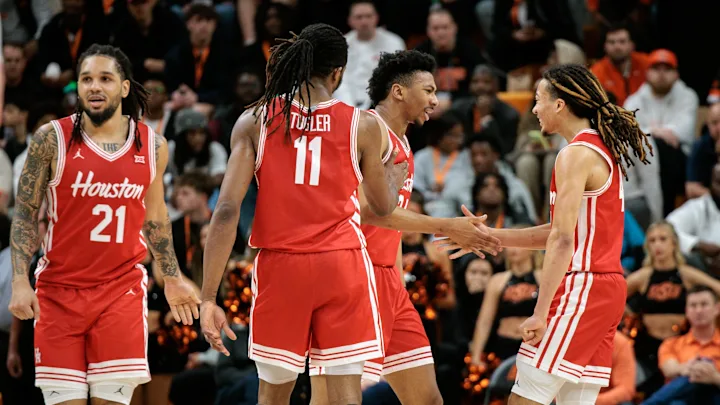
Death, taxes, and a Kelvin Sampson tournament run in March. Houston enters the Big Dance with arguably as good a team as they’ve ever had in the Sampson era, which is saying something considering they were one possession away from cutting down the nets last season. In some ways, this year’s Cougars follow a familiar blueprint from the past. They are gritty, imposing, unrelenting…insert a dozen more buzzwords pertaining to toughness. My favorite attribute about Houston is that, akin to years’ prior, they remain the best closeout team in the country. While their defense as a whole is slightly less dominant compared to Sampson’s previous squads, their feisty capacity to suffocate shooters and wrestle away rebounds remains their not-so-secret weapon.
On the other end of the court, the 2025-2026 Cougars own the best offense in Sampson’s tenure. They take care of the ball — 1st in turnover rate (8.5 per game) and 7th in assist-to-turnover ratio — and possess an embarrassment of riches in regards to shooters and playmakers. Backcourt vets Milos Uzan and Emmanuel Sharp returned to avenge last season’s runner-up status, and they’ve more or less brought the same lethal consistency throughout the 2025-2026 grind. Emmanuel remains the ultimate Sharp-shooter, averaging 15.3 points off 37% from three and 89% from the charity stripe. Uzan’s 11 points, 2.6 rebounds, 4 assists, and 1 steal with similar accuracy beyond the arc would be enough to cement Houston’s guardplay as elite…but neither of those guys are the Cougars’ most impactful guard. That title belongs to freshman phenom Kingston Flemings, who’s been surging up NBA draft boards thanks to his generational skillset and high character mindset. Sampson waxes poetic about this guy, and for good reason: Flemings can score against just about any defensive look, and he elevates his teammates in the process.
Houston will probably go as far as their frontcourt takes them. The Cougars lost J’Wan Roberts to graduation but they retained Jojo Tugler, last year’s Big 12 Defensive Player of the Year. While Tugler’s scoring is up from seasons past, his presence on defense hasn’t always been as consistent. Tugler’s achilles heel this year has been foul trouble – if that trend continues into the tournament, Houston could be treading in vulnerable waters. However, in recent weeks, freshman frontcourt stud Chris Cenac has been a beacon of hope for the Cougars. As the season progressed, Cenac evolved into an exceptionally versatile talent with the ability to dominate the paint, run the floor and punish teams from the perimeter. Cenac’s three-point pointing percentage has climbed up to 35%; when he’s hot from outside, it’s Spy Kids 3-D: Game Over for the opponent.
The Cougars are a balanced cocktail of toughness, size, and skill. They won’t wilt in crunch time, and their 77% free throw shooting (5th best in the tournament field) will prove a tremendous asset in close contests. What’s more: should they reach the Sweet Sixteen/Elite Eight, Houston will have to travel all the way to…the Toyota Center in Houston for a chance to punch their ticket to back-to-back Final Fours.
Florida
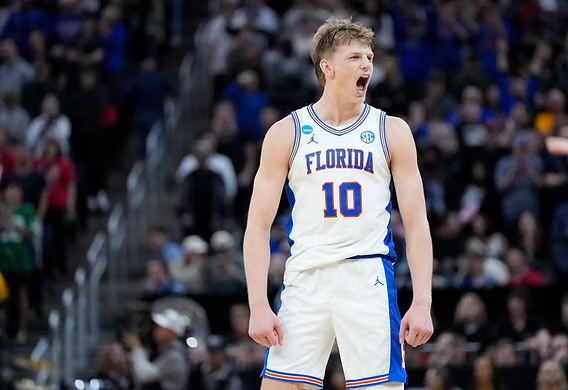
Last season’s champs are chomping at the bit to defend their title. Todd Golden enters this year’s tournament with a roster comparable in skill and even deeper in experience. The Gators rotation features six upperclassmen who all log at least 15 minutes of playing time, and five of these players average double figures in scoring. Returnees Rueben Chinyelu, Alex Condon, Micah Handlogten, and Thomas Haugh give Michigan and Arizona a run for their money re: the most dominant frontcourts in the country. Condon, a pre-season All-American, contributes a steady 15 points, 8 rebounds. 3.5 assists, and 1.5 blocks per game. Chinyelu, Condon’s partner in crime in the paint, emerged as arguably the best defender in all of college basketball this year due to his unwavering capacity to lock down all styles of opposing players. Sprinkle in Handlogten’s 6 rebounds off the bench and Haugh’s electric athleticism/timely shooting and you begin to see why the Gators are a stressful group to go up against.
One glaring difference between this year and last year has been their guardplay. Florida lost all three of their star guards in the offseason and while they reloaded via Arkansas transfer Boogie Fland and Princeton transfer Xavian Lee, it remains a tall order to replace the immense value that Walter Clayton, Alijah Martin, and Will Richard brought to the table. Whereas last year’s squad shot north of 35% from beyond the arc, the team has hovered around a 30% clip for much of this season.
This deficiency propelled the Gators to a relatively slow start; they went 5-4 in their first nine games and dropped to 23rd in the AP Poll after being 3rd during the preseason. Upon further inspection, all four of those losses were close contests vs. tournament-bound teams and three involved Arizona (1-seed), Duke (1-seed), and UConn (2-seed). This helps explain why the Gators rate 289th in “luck” at KenPom; they could easily be 30-4 instead of 26-7.
As was the case with UConn when they were defending their back-to-back titles last year and nearly upset Florida in the 2nd round, these Gators will gnaw and gnash until the bitter end. They have the skill and scheme to shut even the most formidable offensive opponent’s water off, and the guts and glory to bloody their way to back-to-back Final Fours. But they also rank a dreadful 236th in free throw percentage and 324th in three point percentage. If the bracket breaks their way I could see them coasting to the Final Four despite these flaws, but I have a hard time visualizing another repeat champ.
Iowa State
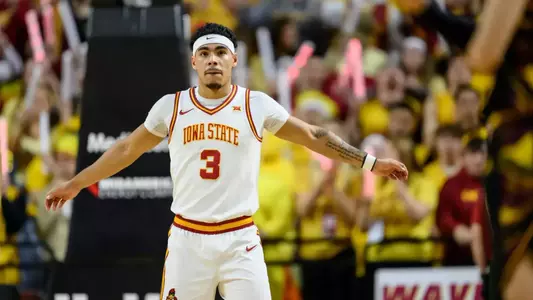
The Cyclones make me smile. Coach TJ Otzelberger has been building towards this moment for five seasons, ever since he inherited a program that won exactly 2 games the year prior. In his first season at the helm, Otzelberger orchestrated a shocking turnover to the tune of a surprise Sweet Sixteen run. Two years later, the Clones won 29 games and made it back to the second weekend only to run into buzzsaw UConn amidst their path towards repeating as champs. Heading into last season, many anticipated Iowa State would take an even bigger leap forward; a string of late-season injuries held them back. This year, Iowa State appears to be having its moment in the sun.
Lead by senior point guard Tamin Lipsey — an Ames, Iowa native — the Cyclones shot out of a cannon to the tune of a 16-0 start, including a massacre over then #1 Purdue in their own gym. Iowa State has been somewhat hot and cold ever since, going 12-6 in the gauntlet that is Big 12 conference play, but they still managed to amass wins against the likes of Kansas, Houston and Texas Tech before falling a buzzer-beater short of winning the Big 12 tournament vs. their worthy rival Arizona.
Otzelberger’s army is exceptionally deep and veteran-ladden. They rank 11th in the country in D1 experience and feature seven reliable scorers. While the aforementioned Lipsey has for years been their anchor at the point guard position, it’s been the play of his two teammates — Milan Momcilovic and Joshua Jefferson — that has moved Iowa State into the upper echelon of the college hoops hierarchy. Momcilovic is the best shooter in the nation, full stop. He shoots a blistering 50% from three and 88% from the line, and does more than hold his own on the defensive end. Jefferson, a former Saint Mary’s Gael, has blossomed during his two years in Ames into a legitimate first-team All-American candidate. He’s the only player across all major conferences to average at least 15 points, 5 rebounds and 5 assists (17 points, 8 rebounds, 5 assists, 2 steals and 1 block to be exact!).
Plenty of statistics point to Iowa State as a juggernaut: they rank 36th in points per game, 5th in average scoring margin, 16th in assists to turnover ratio, 12th in 3-point shooting, and 9th in opponent points per game. To be fair, this team also has some flaws that could prove fatal — they rank 343rd in the country in free-throw shooting and have at times been pushed around by more athletic teams. The Cyclones seem destined for the second weekend and it’ll come down to a few bounces as far as what happens next.
Vanderbilt
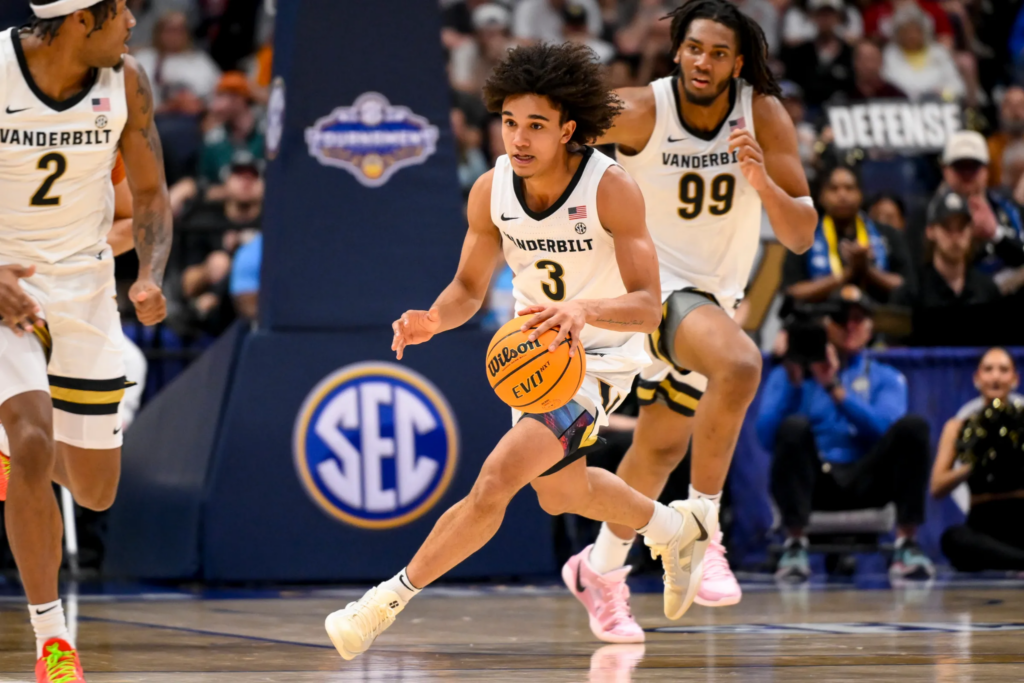
For much if not all of non-conference play, Vanderbilt was the best story in college hoops. Like Iowa State, they jumped off to a 16-0 start before hitting some turbulence. Ultimately, the Commodores managed to land the plane, notching three consecutive wins over ranked opponents (including a 17-point blowout over Florida) for a shot at the SEC tournament title. They came up short in the championship game vs. Arkansas but in the process gave viewers another reason to trust them moving forward.
Mark Byington’s 10-man rotation plays at a breakneck tempo. Nearly all of their guys can shoot and everyone takes care of the ball. Vanderbilt ranks 12th in assist-to-turnover ratio, 10th in points per game, 22nd in free throw percentage, and 19th in true shooting percentage. Their offense is poetry in motion: the ball moves side-to-side, rarely sticking in one spot, with an omnipresent momentum towards the hoop.
Look for the Tylers — Tyler Tanner and Tyler Nickel — along with Duke Miles to put on a clinic on both ends of the floor; all of them are triple-threats on offense and pocket-pickers on D. If there’s one flaw for this team, it’s their collective size: none of their starters are taller than 6’7”. But if that wasn’t an issue last week vs. the gigantic Florida Gators, they might be okay for a while…especially since they’re poised to face Florida again in the Sweet Sixteen. First, the ‘Dores will have to survive a feisty McNeese team in round one. Coach Byington is quite familiar with the fickle 12 vs. 5 game, as he is two years removed from leading James Madison to a first-round upset over Wisconsin. Now, he’s prepared to slay Cinderella en route to a deep tournament run. Win or lose, these guys are fun to watch; the tournament would benefit from their story extending a few more chapters.
Arkansas
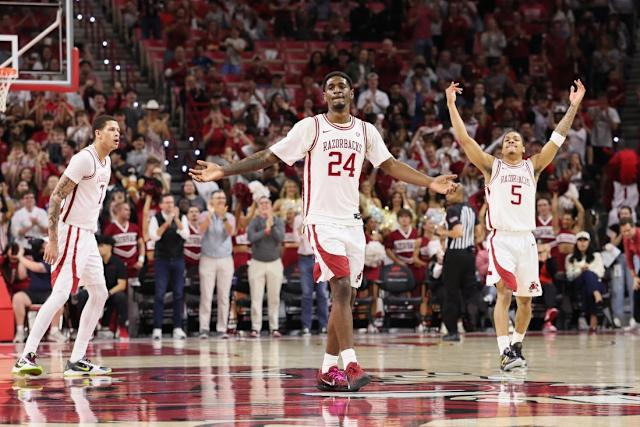
Darius Acuff has some Kemba in him. To be clear, I’m not calling Arkansas’ stud freshman a carbon copy of Kemba Walker…but I’m not not saying he’s destined for an even brighter NBA career. Acuff enters the tournament averaging 23 points, 6.5 assists, 3 rebounds and 1 steal off 44% from three. He’s been the antithesis of Kansas’ Darryn Peterson in the sense that he has played in all but one matchup and averaged 35 minutes per game. Moreover, Acuff scored a historic 49 points against Alabama on February 18th, logging all 50 minutes in a double-overtime road loss, despite having been in a walking boot just two days prior. You think this guy wants to win, or what?
So do his teammates and coach. The Razorbacks are ready for the moment, fresh off a 13-5 record in conference play and an SEC tournament championship. The chip on John Calipari’s shoulder proved useful last year when he led his squad to an improbable Sweet Sixteen as a 10-seed. This time he enters the fray with an undeniably deeper and more talented roster, featuring four starters who average over 11 points and eight rotation players who log north of 19 minutes a night.
Keep a close eye on 6’6” sophomore guard Billy Richmond and 6’10” senior center Trevon Brazile. Richmond blossomed in the SEC championship game vs. Vanderbilt and is a mismatch just about everywhere on the floor. Brazile has seen it all over the course of his five seasons of eligibility: after suffering a torn ACL during his sophomore year, Brazile rehabbed all the way back to become the only Razorback to ever record 40 three’s, 40 blocks, and 40 steals in one season.
The hogs’ explosive offense ranks 3rd in points per game, 3rd in assist to turnover ratio, and 16th in true shooting percentage. A couple favorable matchups could pin them against Arizona in the Sweet Sixteen. Should they pull the upset, the sky is the limit from there on out.
Wisconsin
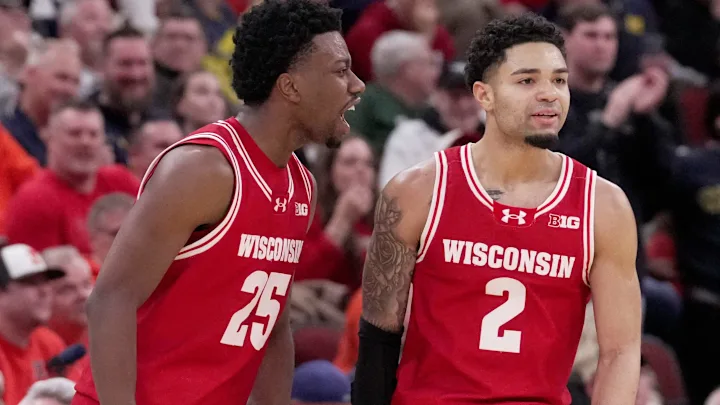
Do the Badgers sneakily boast the best backcourt duo in the country? That’s the question circling ‘round the biz. Nick Boyd (formerly of the Florida Atlantic Final Four squad) and John Blackwell are the only pair in the nation averaging 19+ points per game. Each guy has been going off recently — Blackwell notched 34 and 31 in the Big Ten quarters and semis respectively, while Boyd bested John with 38 of his own in that semifinals OT win over Illinois.
Wisconsin won that game over Illinois, one of the most explosive offenses in the country, shooting a mere 24% from three. That hadn’t been the Badgers’ blueprint for their previous statement victories — they’re the only team in the last 20 years to make 15+ triples in four wins over ranked opponents — but it’s an encouraging sign nonetheless.
Greg Guard’s team is physical, experienced, and plenty deep. They take care of the ball (top ten in turnovers per game) and rank 26th in free throw percentage. Once you add up these attributes, it starts making sense how they’ve been able to accumulate wins over elite tournament teams including Michigan, UCLA, Michigan State, Purdue, and Illinois.
These Badgers mean business. They aren’t afraid of high-octane High Point in Round 1, although that could end up being one heck of a battle.
Gonzaga
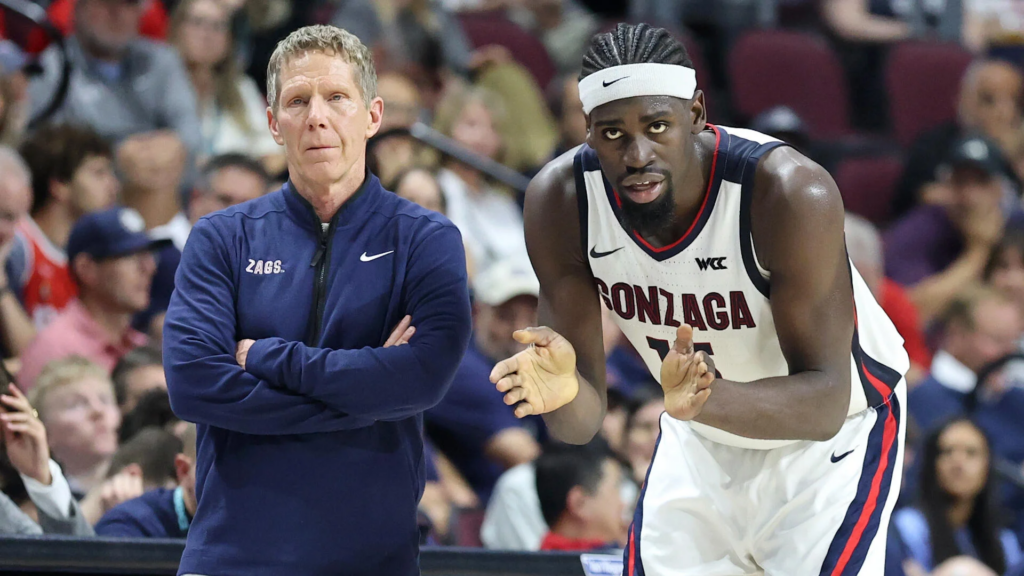
Mark Few’s Zags went out with a bang in their final season as a member of the West Coast Conference, securing a clean sweep of the WCC regular season and tournament championships. Gonzaga has been somewhat of a tough nut to crack this year: they cruised to a 30-3 record with wins over tournament-bound Alabama, Kentucky, UCLA, Santa Clara (twice) and Saint Mary’s, but most of their other victories were padded via inferior competition. What’s more, Gonzaga has been without a crucial cog in Braden Huff, who is still recovering from a knee injury he suffered in January. Few’s most recent update suggests that Huff is becoming increasingly mobile in practices and is targeting a Sweet Sixteen return should the Bulldogs escape the first weekend of Madness.
Gonzaga proceeded to go 13-2 in Huff’s absence and has benefitted of late from two emerging freshman, Davis Fogle and Mario Saint-Supery. Collectively, the Bulldogs have evolved into a 10-deep rotation whose depth affords them the ability to sub players in and out like hockey lines to keep everyone fresh for crunch time. The numbers back this up — Gonzaga is 1st in the nation in 2nd half scoring margin.
Graham Ike and Tyon Grant-Foster are the two names to know. Ike is a fifth-year senior whose bullying paint presence and timely shooting render him a damn near impossible matchup for opponents to gameplan for. Tyon Grant-Foster is an equally athletic talent, but before I share more on his game, it’s important for the reader to know his past. Grant-Foster experienced multiple cardiac arrests in 2021 — first on the court at DePaul and then months later in practice — and missed most of the next two full seasons before mounting one of the best comeback stories in college hoops history. When Tyon returned for the 2023-2024 season, he led Grand Canyon to a first-round NCAA tournament upset before they nearly clipped Alabama (who went on to make the Final Four) in Round 2. This past offseason, when Grant-Foster transferred from GCU to Gonzaga, the NCAA initially denied a waiver for his eligibility (he’s 26 at the time of this blog post), prompting coach Few to express his vehement disagreeing with the ruling: “He literally died twice,” Mark Few pointed out during a pre-season presser. A legal challenge was filed on Tyon’s behalf, and a Spokane County judge later overturned the NCAA’s decision to grant him an injunction to play. Grant-Foster is averaging roughly 12 points, 5 rebounds, 1 assists, 1 block, and 1 steal this season.
What separates this iteration from Zags teams of the recent past is their defense: Few’s squad ranks 16th in points allowed and 13th in opponents’ effective field goal percentage. On the offensive side of the ball, Gonzaga features a plethora of playmakers who can all score at the end of the shot clock and handle the ball with care — the Bulldogs have the 5th-best assist to turnover ratio and rank first in field goals made per game.
Gonzaga got a decent draw across the first couple of rounds, which could set up an epic Sweet Sixteen battle vs. Purdue for a ticket to the Elite Eight.
Pretenders
/prəˈtendərs/ – Teams seeded 1-5 whose flaws could catch up with them
Alabama
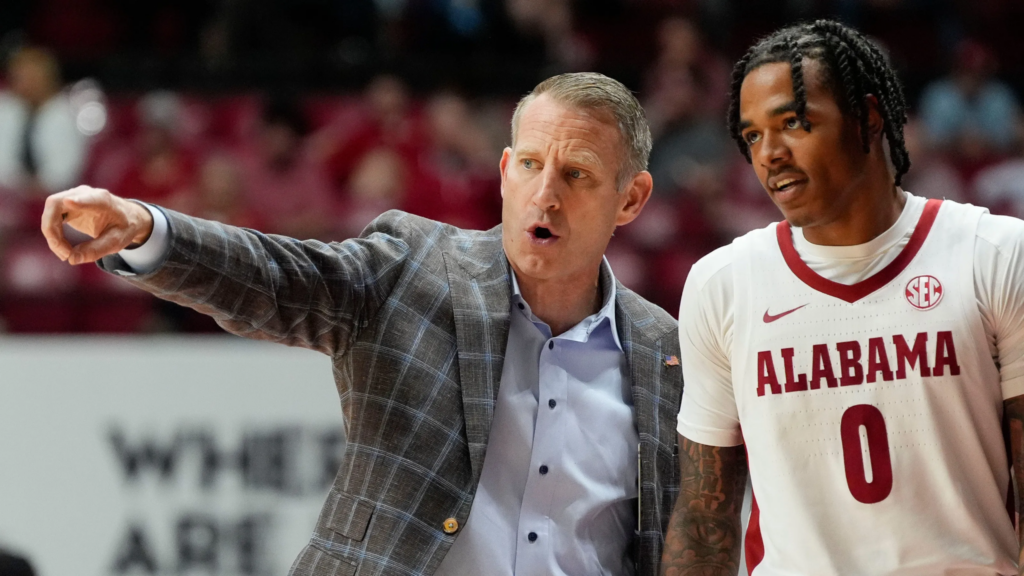
Nate Oats was ahead of the analytics curve when he brought his “5-out drive and space” offense to Alabama 7 seasons ago. The Crimson Tide’s plan of attack is predicated on paint touches and 3’s in order to maximize scoring efficiency and limit “bad shots.” It’s hard to argue with his scheme’s efficacy over the years, as Oats brought Bama back to its sixth straight tournament appearance where he reached the Elite Eight in 2025, the Final Four in 2024, and the Sweet Sixteen in 2023.
Slowly but surely, the rest of the country is catching on to this system. His offense remained highly effective this season (1st in points per game) but his defense continues to pay the price. Alabama ranks 352 (out of 365) in opponents’ points per game. Not great!
The Crimson Tide features an elite trio of guards in Aden Halloway (16.8 PPG), Labaron Philon (21.7 PPG) and Latrell Wrightsell (12.8 PPG), with each player shooting north of 35% from beyond the arc. The problem? Halloway was just arrested for first-degree possession of marijuana with the intent to sell, and has been removed from the team until he goes through the school’s investigation process.
Short-handed on offense and perpetually porous on D, the Crimson Tide are ripe for a disappointing first weekend.
Illinois
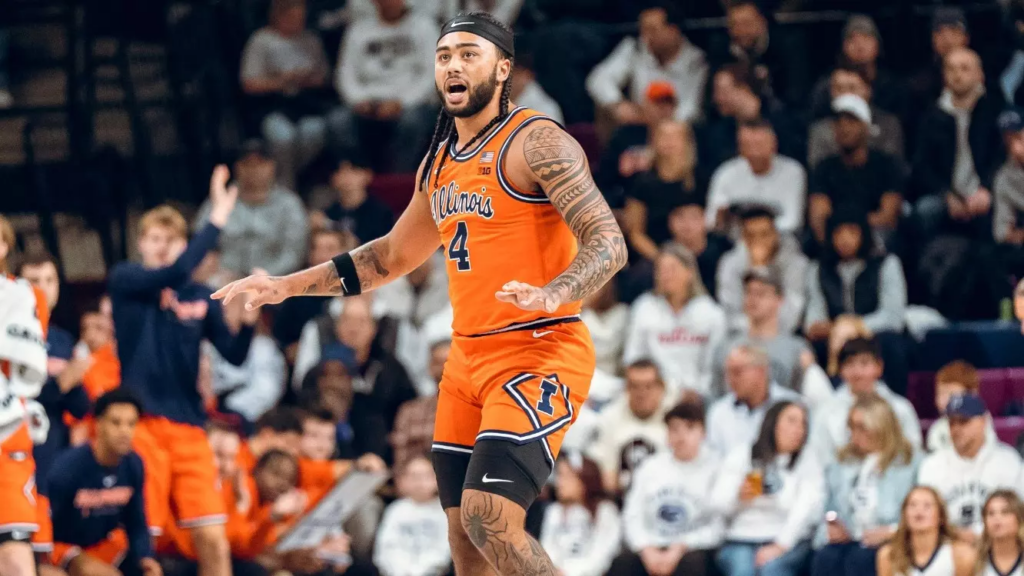
Brad Underwood has turned Champaign, Illinois into a Mecca of European talent. This year’s Illini squad includes European studs Tomislav and Zvonimir Ivisic (Croatia), David Mirkovic (Montenegro) and Mihailo Petrovic (Serbia), along with honorable mention Andreij Stojajovic (of the Peja descent). Underwood’s other American-born players are no slouches, either — freshman one-and-done Keaton Wagler has been a revelation this season, averaging 18 points, 5 rebounds, 4 assists and 1 steal on 40% from three and 80% from the line; senior point guard Kylan Boswell contributes a steady 13 points, 4 rebounds and 3 assists; senior forward Ben Humrichous snags 4 boards and shoots 35% from beyond the arc; even junior forward Jake “Fabio” Davis is a guy to scout, as he launches threes at a clip of 41%.
Collectively, the sum of these parts has yielded the 2nd highest offensive rating on KenPom and the 9th best average scoring margin. The Illini also snag the 7th most rebounds, make the 7th most threes, and shoot the 6th best free throw percentage. In Alabama-like fashion, Illinois shot more than half of their shots from beyond the arc this season to outpace tournament teams including Texas Tech, Tennessee, Missouri, Iowa, Purdue, and Nebraska. Back in January they became the 4th team ever to beat two Top 10 teams on the road in the same week, but have since cooled down from the field to the tune of a .500 record in their last 10 games.
Illinois is good, not great on the defensive end. While they take great care of the ball on offense (top ten in turnovers per game), they’re also dead last in the country at forcing turnovers from their opponents. Their inability to secure clutch stops in big moments (4 one-possession losses in OT) gives me pause for their tournament chances. Sure, you could argue they’re due for some good fortune, given they currently register 305th in luck on KenPom; but at a certain point, you’ve gotta start considering them as a team that’s almost good enough to win a tough game. That won’t cut it in March.
Kansas
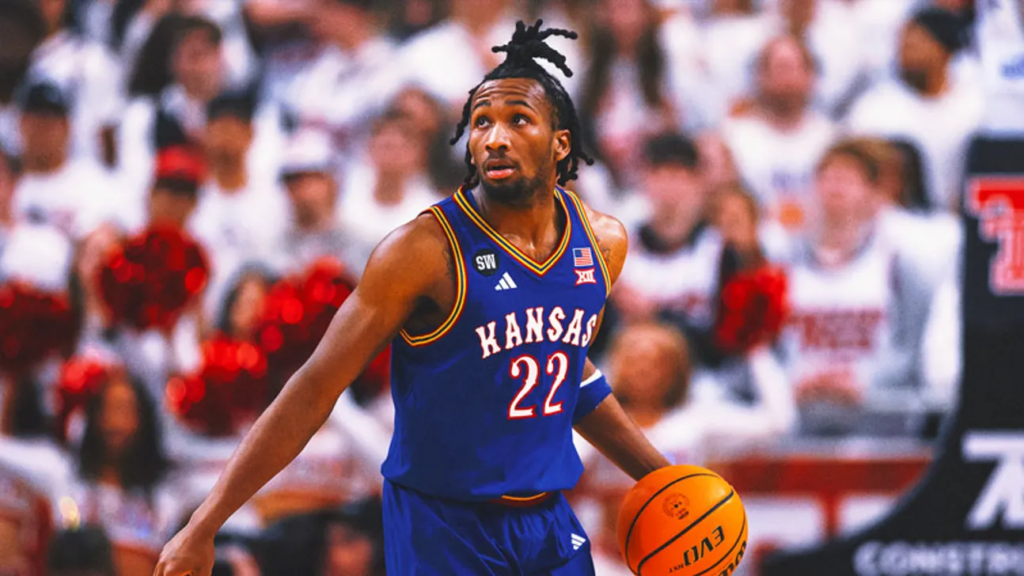
Has any team had a weirder season than Kansas’ 2025-2026 campaign? I’m having a hard time thinking of a close 2nd. The Jayhawks are probably the highest variant team in all of the bracket, largely because they were the highest variant team all season. Their résumé is all over the place — they’ve beaten tournament-bound Tennessee, NC State, Missouri, TCU, Iowa State, BYU, Texas Tech, Arizona, and Houston, but they’ve also lost to the likes of Arizona State, Cincinnati, West Virginia, and UCF.
The obvious variable at play has been freshman Darryn Peterson’s availability. He’s been a revolving door of playing time — out for a few games, in for a few games, on for one half, off for another. When he’s healthy and clicking, Peterson looks like the most talented player in the country. But when he’s quasi-injured or actually injured, it’s hard not to feel there’s some unspent talent.
To confuse matters further: Kansas has actually been better on paper without Peterson, owning a 9-2 record when he misses games vs. a 12-7 record when he plays. In fact, Peterson was inactive in Kansas’ best win over then-undefeated Arizona.
Sure, Peterson’s 20 points, 4.4 rebounds, and 1.5 steals per game on 38% from three and 82% from the line is impressive. But so is Tre White’s 14 points and 6.8 rebounds on 42% from three and 87% from the line, as well as Flory Bidunga’s 79 dunks, which is the 2nd most across D1. And I haven’t even gotten to Melvin Council Jr, a senior guard who has morphed into MJ in late game situations on more than one occasion.
Kansas can beat anyone in the tournament but they can also lose to most of the field, too. Their inability to force turnovers gives them a razor-thin margin of error vs. quality opponents. They’ll throttle Cal Baptist, but beyond that, who knows?
UConn
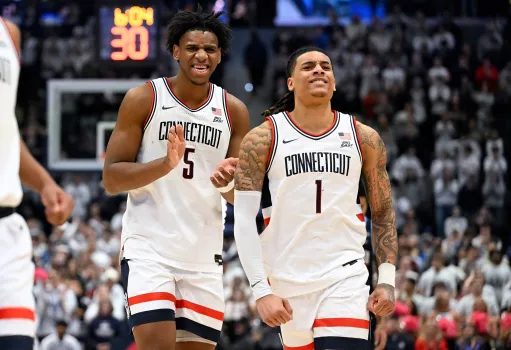
UConn’s volatility is concerning. Hurley’s Huskies are immensely skilled and athletic — not to mention deep — and they have the positional size to match up with anyone. If you asked me on February 1st, I’d have put them on my short list of teams I could trust to go on a deep run. But over the ensuing six weeks, UConn started to look exceedingly mortal.
It started with a 9-point loss against St John’s at Madison Square Garden — against a conference rival, on the road, no big deal. Then it swelled into a home loss to a .500 Creighton team. Hmm. Then it manifested as a loss to a Marquette squad that was 8 games under .500. That’s not good, And then, just when UConn was handed their chance at redemption on a silver platter, they fell flat on their face in the Big East tournament championship game and got blown out by 20 vs. the Johnnies.
To be fair, Connecticut still has time to right the ship. They’ll accumulate some forward momentum in their game vs. Furman before readying for their first real test in Round 2. At that point, they should still be able to cruise so long as they play like the team that’s 12th in scoring margin, 7th in assists and 8th in points allowed. The Huskies will have to clean up some issues around careless turnovers and hope their lackluster 71% free throw percentage doesn’t come back to bite them.
UConn’s starting five is superb. It features a three-guard attack in Solo Ball (13.5 points, 3.3 rebounds, 1.6 assists), Silas Demary (11 points, 4.5 rebounds, and 6.2 assists on 41% from three) and Braylon Mullins (12 points, 3.5 rebounds, 3.5 rebounds on 34.5% from three and 85.2% from the line). Alongside these three guards are the Huskies’ two most important players: 2x national champion Alex Karaban (12.6 points, 5.2 rebounds, and 2.3 assists on 38.6% from three and 84% from the foul line) and center Tarris Reed Jr. (13.7 points, 8.1 rebounds, 2.3 assists, 1 steal and 2 blocks).
The Huskies have demonstrated excellent poise late in the shot clock, and Hurley is never afraid of a fight. UConn will find itself in some dog fights; we’ll see how many times they can survive those.
Purdue
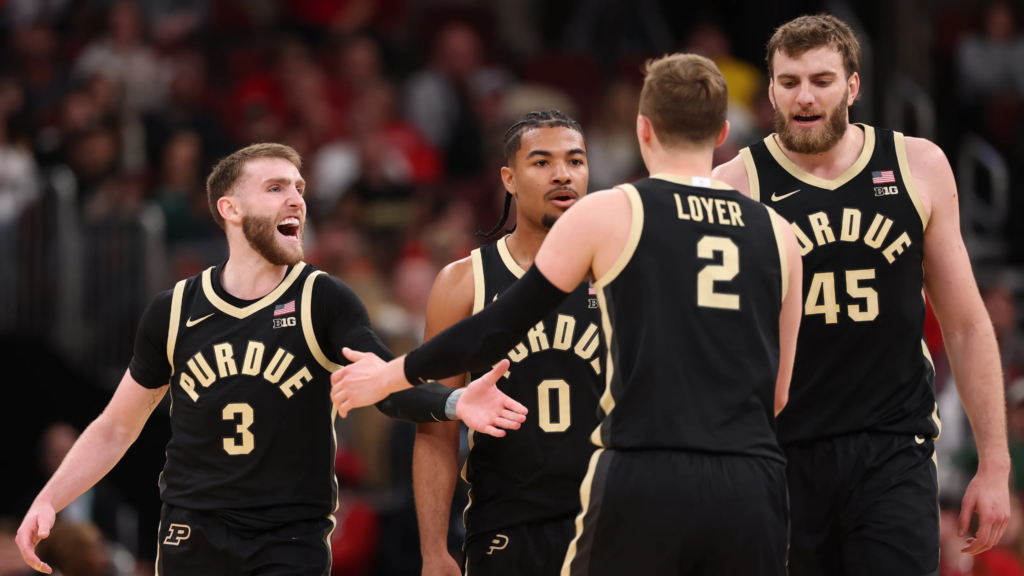
Purdue entered the season the #1 team in the country and, for a brief stint, they looked the part. AP voters were understandably drawn to their bevy of experience and talent at key positions. The Boilermakers’ backcourt features two four-year starters in Braden Smith and Fletcher Loyer. During their freshman year, Smith and Loyer’s team outperformed all expectations to earn a 1-seed in the tournament; but then, they very much underperformed in their historic loss to 16-seed Farleigh-Dickinson. Matt Painter’s team took their lumps and learned from it, earning a 1-seed again the following season and advancing all the way to the championship game. Last season, Purdue had to work through some growing pains to re-establish their identity in the post Zach Edey era. They found another gear in March and lost a nail-biter to runner-up Houston. Thus, all signs pointed to this season as their best chance at cutting down the nets.
Braden Smith is on the cusp of registering the most assists in D1 history. He’s two away from breaking Bobby Hurley’s record, and given that Smith’s been averaging north of 9 per game, it’s safe to assume history will be made in Friday’s opening round game. Floor generals are essential in March and Purdue has one of the all-time greats. That’s surely one thing the Boilermaker faithful can hang their hat on, as Smith & Co. possess the best assist-to-turnover ratio in the nation and take care of the ball better than anyone else in the field. Purdue is also an excellent shooting team: they have the best offensive efficiency rate in KenPom history, rank 14th in true shooting % and shoot 38% from three.
With that said, Matt Painter’s team is not without flaws. They have shown a capacity to be pushed around by more athletic teams and their defense isn’t much to write home about. While they got hot at the end of the season and made a run to secure a Big Ten tournament title, Purdue had an abysmal 6-weeks stretch prior to that, going 6-7 with a string of losses to what was on paper inferior opponents. I trust these guys to make it out of the first weekend, but I wouldn’t count on a Final Four run this time around. The guy I’ll be zeroing in on is Trey Kaufman-Renn, a 6’9” 240 lb senior forward who averages 13.6 points, 8.5 rebounds, and 2.6 assists on an elite 58% shooting. If he can consistently get bucks in the paint and disrupt opponents on the other end, Purdue’s ceiling raises could become boundless.
Virginia
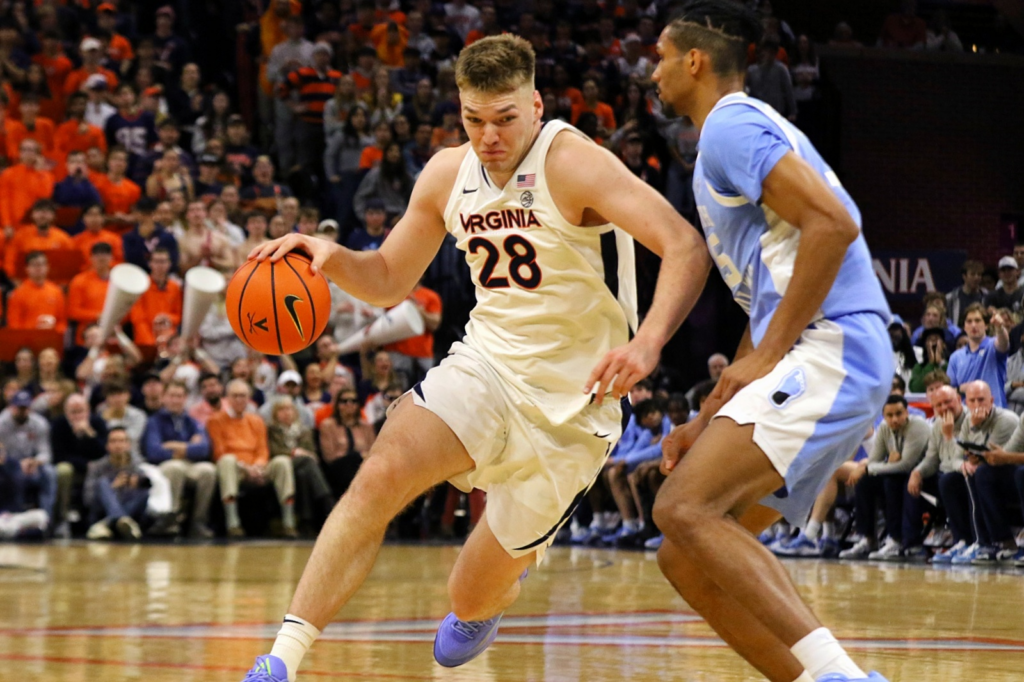
This Virginia team is a heck of a story. Ryan Odom has exceeded expectations in his first season coaching the program, and then some. Incredibly, Odom was the coach for UMBC when they pulled off the first ever 16 over a 1…against Virginia. Cavaliers fans will rest easier knowing he isn’t lurking elsewhere in the bracket.
I might even call Virginia the best under the radar team in the country. They’re the 3-seed no one is talking about after having cruised to a 2nd place finish in the ACC and a 29-5 record overall. Their offense features an explosive inside-out attack, with sharp shooters such as Jacari White (43% from three) and Sam Lewis (41% from three) keeping defenses honest, and point guard Chance Mallory controlling the pace. And then there’s Belgian “freshman” (he’s 23) Thijs De Ridder, a 6’9” forward with an elite blend of interior dominance and guard-like shooting. Let’s also not forget about senior center Ugona Onyenso, who set a new ACC tournament record with 21 blocks over three games.
Virginia should coast to the Sweet Sixteen, but from there, I think this delightful story reaches its end. Virginia’s résumé is padded due to another weak ACC schedule; they beat the teams they were supposed to but struggled to punch up vs. the cream of the crop. It’s hard to imagine them beating a team like Iowa State in Round 3.
Michigan State
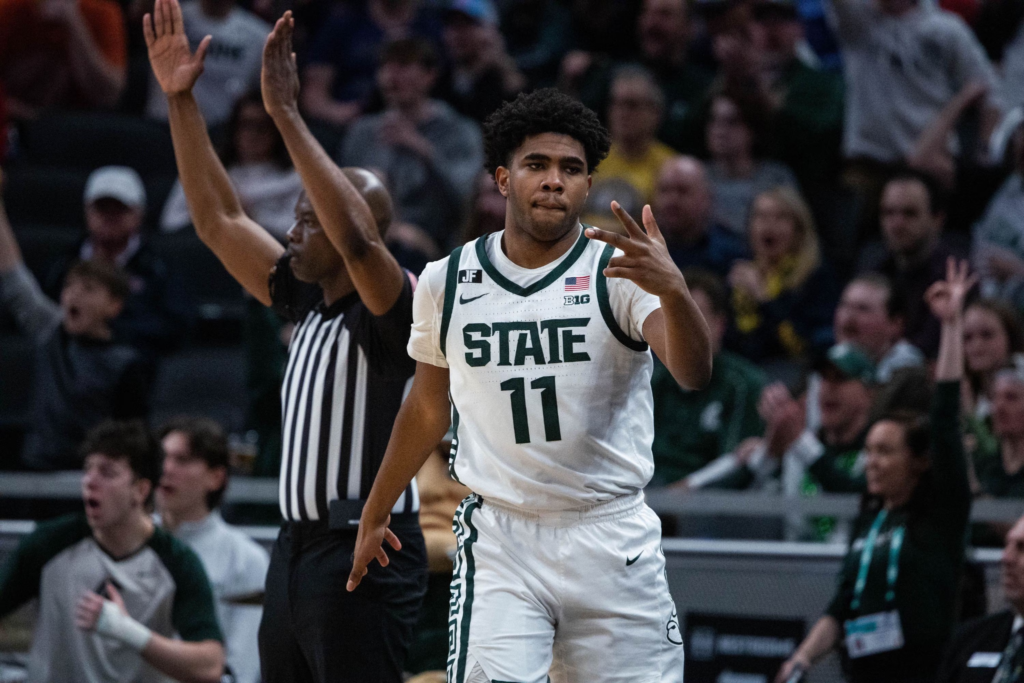
Izzo’s Spartans follow a familiar blueprint: they are elite at rebounding — best in the nation on the defensive end at 80% — suffocate teams on D, prioritize two’s over three’s on offense. Jeremy Fears is one of the very best point guards in the field, averaging 15.7 points, 2.4 rebounds, 9.2 assists and 1.3 steals on 89% shooting from the foul line. Michigan State’s experienced frontcourt of Jaxon Kohler, Coen Carr and Carson Cooper has served as yet another reliable rudder to steer them towards winning plays and control the way games are played. Speaking of Carr: get ready for some electric displays of athleticism, as he is arguably the best dunker in the entire sport.
As I mentioned, Sparty isn’t prolific from beyond the arc. They make a little under 8 threes per game (183rd) off an average of 21 attempts (232). Last season, Sparty compensated for this deficiency by forcing a lot of turnovers and winning the margins in transition points. This year, however, Michigan State ranks 319th in steals per game. They’re vulnerable to a 2nd round upset.
Nebraska
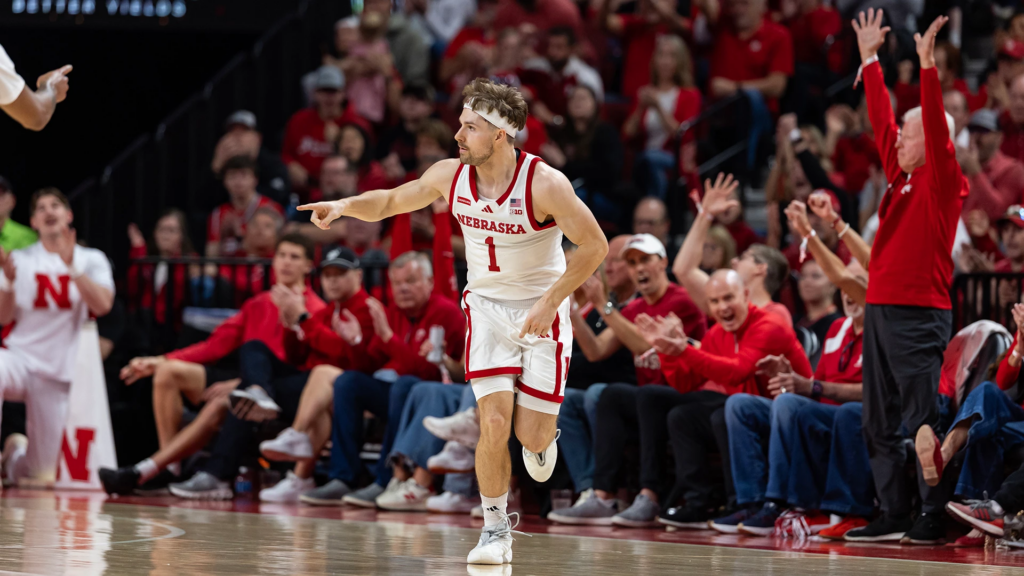
Nebraska is the only power-conference team without an NCAA tournament win to its name. I think that finally changes this year. Fred Hoiberg has done a masterful job building a team that’s talented enough to keep up with the big boys of the Big Ten. The Cornhuskers started the season 20-0 before dropping a few games to elite competition and never fully regaining their mojo down the stretch. However, the tournament presents a new beginning for a team that has the 6th best assist-to-turnover ratio and 7th best 2nd-half scoring margin.
Hoiberg has a lot of lethal shooters on his team, including his son Sam, who shoots 40% from beyond the arc, along with Pryce Sanfort (40%), Jamarques Lawrence (35%) and Braden Frager (35%). Ultimately, I’m concerned about their lack of rebounding, particularly on the offensive glass — they snag fewer than 8 offensive rebounds per game, which is 286th in the country. Nebraska will have its moment on Thursday but I’m not confident they’ll survive the weekend.
Texas Tech
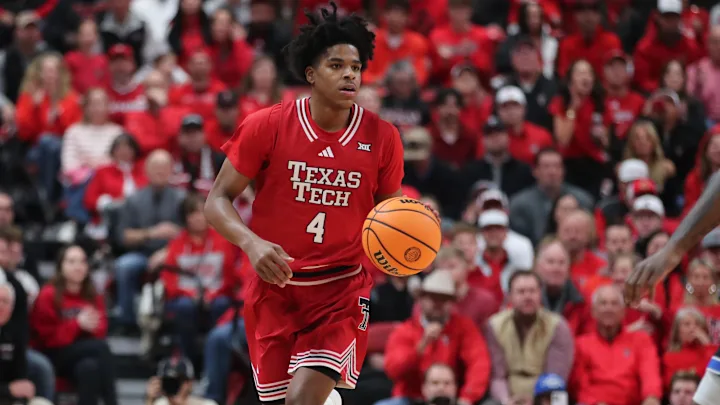
A month ago, Texas Tech looked ripe to return to their 3rd straight Sweet Sixteen and a 2nd straight Elite Eight. Then, All-American stud JT Toppin suffered a season-ending torn ACL on February 17th, and suddenly their future looked drastically different. Incredibly, that didn’t stop Tech from going into Ames and securing one of the best road wins by any team this season when they dominated Iowa State in their own gym. But, shortly thereafter, the Red Raiders came back down to earth and finished the season on a three-game skid. Their fate lies in the hands of star guard Christian Anderson, who’s one of the best scorers in the country and has on many occasions flaunted his clutch gene. However, even he has been hobbling of late, so who knows what version of him we’ll see on the floor. Pour one out for the Red Raiders. They deserved better.
St John’s
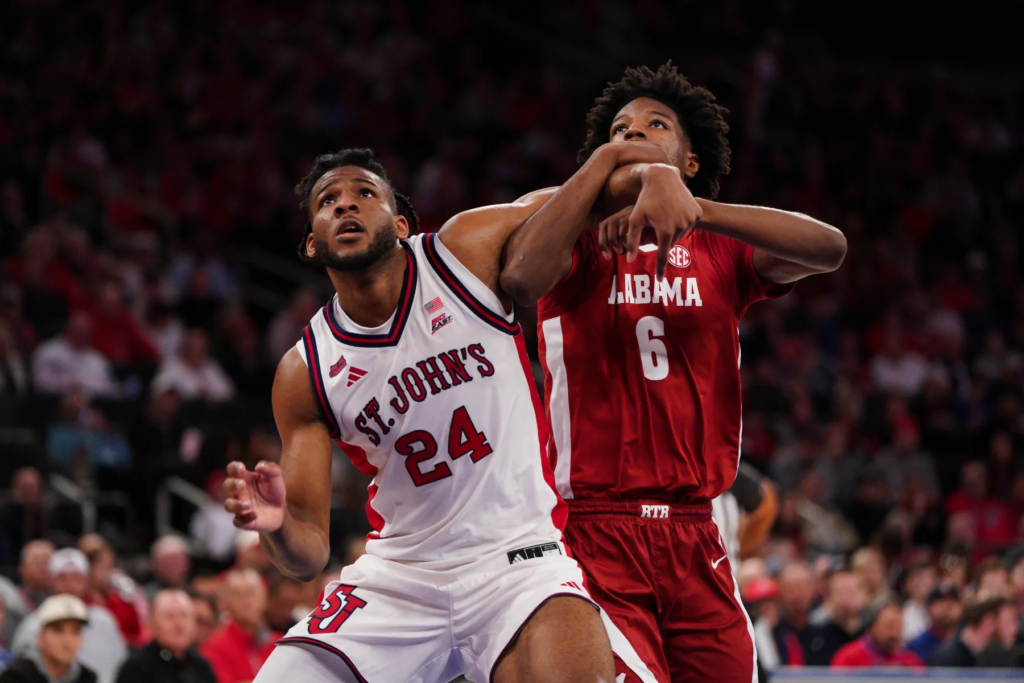
St John’s entered the season with a ton of hype, coming in at 5th on the preseason AP Poll. Many believed their unique blend of size and athleticism, coupled with Pitino’s relentless scheme, would bring the program to new heights and keep them in the “best team” conversation from November through March.
November was less kind to the Johnnies than most anticipated, as Pitino’s squad got off to a 4-3 start. By Christmas, St John’s had fallen all the way out of the AP Poll, and by the first week of January, they had already tallied their 5th loss of the season. Then, the winds changed for the Red Storm as they notched 13 wins in a row en route to a 19-1 finish, which they capped off with a dominant 20-point win over UConn in the Big East conference title game.
The Johnnies are deep. Seven players log 18+ minutes six average 8+ points. Everyone rebounds and everyone is a disruptive force on D – the Johnnies are top 50 in steals per game and rank 21st in blocks. Shooting-wise, however, they’re a bunch of average Joe’s (John’s?). In particular, the Johnnies rank 315th in 3-point percentage and 257 in threes made.
Zuby Ejiofor (16 points, 7 rebounds, 3.5 assists, 1.2 steals, 2.1 blocks) is one of the most dominant players in the country, and his supporting cast of Bryce Hopkins, Oziyah Sellers, Ian Jacks, Dillon Mitchell, Dylan Darling, and Ruben Prey (to name a few!) are all capable of taking the baton and running with it. I would be shocked if St John’s lost their opening game on Friday, but I don’t like their chances in the 2nd round against a superior offense in Kansas.
Sleeping Giants
/slee-puhng jai-uhntz/ High-major programs seeded 6+ who are poised to make noise
Tennessee
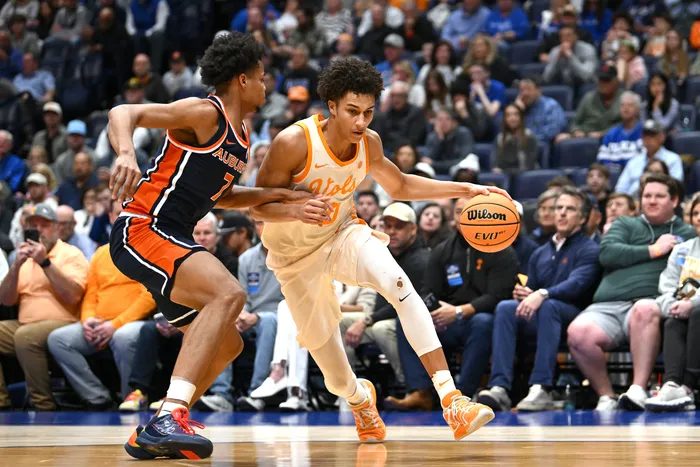
When I parse through this year’s tournament field, I only see one Sleeping Giant worth discussing. Tennessee has flown under the radar for much of this season, and I can’t quite discern why. They have the coaching (Rick Barnes is the 39th winningest coach in D1 history), the NBA talent (freshman Nate Ament is a lottery pick), and veteran guard play (Ja’Kobi Gillespie is one of the best distributors and scorers in the tournament). The Vols play complimentary basketball with a balanced blend of interior touches and outside shots, and their defense is stifling as always. They own wins over tournament-bound Vanderbilt, Alabama, Texas, Texas A&M, Houston, Louisville, and Georgia and control the glass to the tune of 43 rebounds (9th) per game. Look for Felix Okpara to have a field day down low. If he turns into “Blockpara”, these guys could be dancing into the second weekend.
One and Dones
/wən an(d) dəns / High-major programs seeded 6+ who might be doomed from the start
BYU
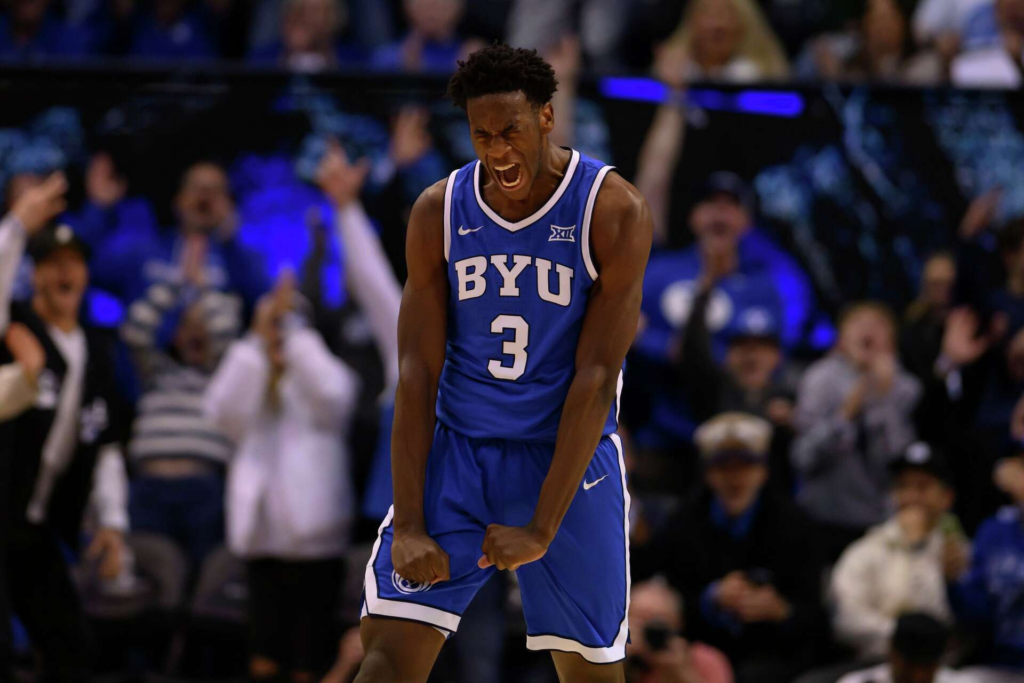
BYU entered the season a Final Four hopeful, but limps into the tournament as a 6-seed having lost 10 of the last 17. Freshman AJ Dybansta is the real deal — he leads the nation in scoring and appears to be a lock for the #1 or #2 overall pick in the NBA draft — but he hasn’t had nearly enough help along the way. The Cougars were clicking through mid-January as they got off to a 16-1 start. Amidst a skid a month later, Batman lost his Robin when Richie Saunders — whose grandfather invented the tater tot (I shit you not!) — suffered a season-ending torn ACL. BYU has been a shell of itself ever since; they’ll be lucky to survive the first round.
Iowa
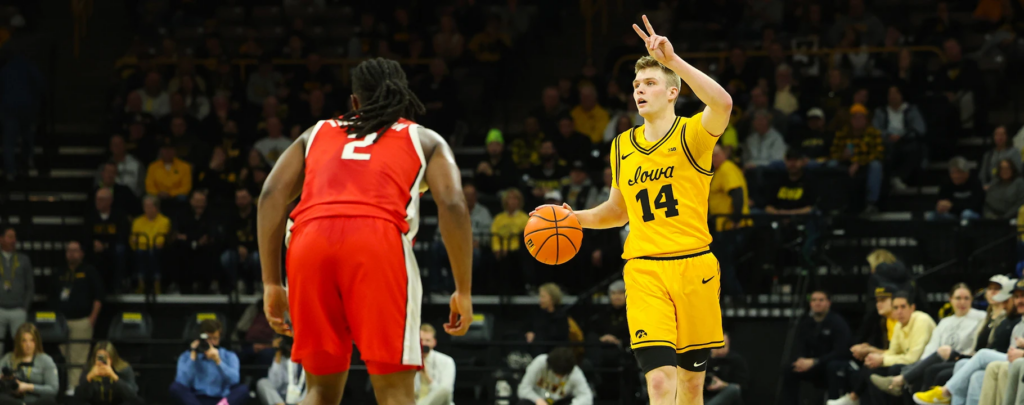
Ben McCollum’s Hawkeyes ripped off seven straight wins to begin the season; ever since, the paint has been slowly peeling off to reveal a hard truth: their roster consists of one exceptional talent in the form of senior guard Bennett Stirtz…and nobody else of note. Iowa finished the season losers of 7 of their last 10. The Hawkeyes are taking on water, and fast.
Villanova
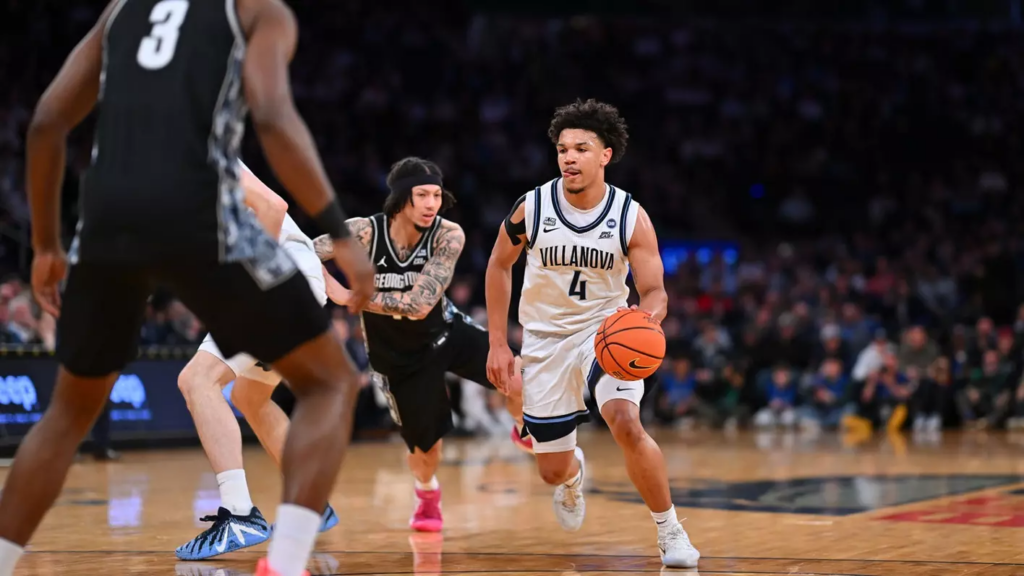
Aside from a non-conference overtime win over Wisconsin back in December, Villanova has beaten Villa-no-one of note: 23 of their 24 victories came against non-tournament teams and they were on the wrong side of a clean sweep vs. St John’s and UConn. Their starting five is relatively balanced, with each player averaging north of 10 points per game, but they’re top 40 in exactly zero team statistics across both ends of the floor. The Cats might be doomed in the 1st round matchup vs. Utah State.
Missouri
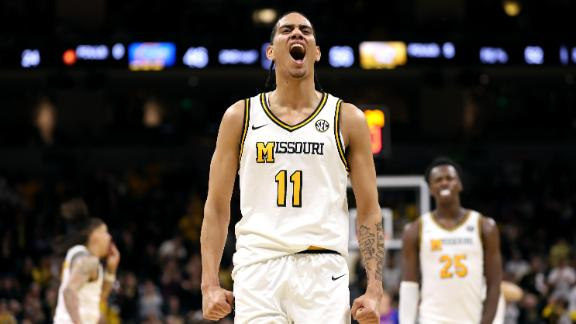
Missouri’s season has been inconsistent AF. They won their first 8, lost their next 2, won their next 2, lost, won 2 more, lost, won again, lost twice, won, lost, won three, lost, won, lost, won two, and lost three. I’m not so sure they know what it takes to be a Tiger come tournament time.
Kentucky
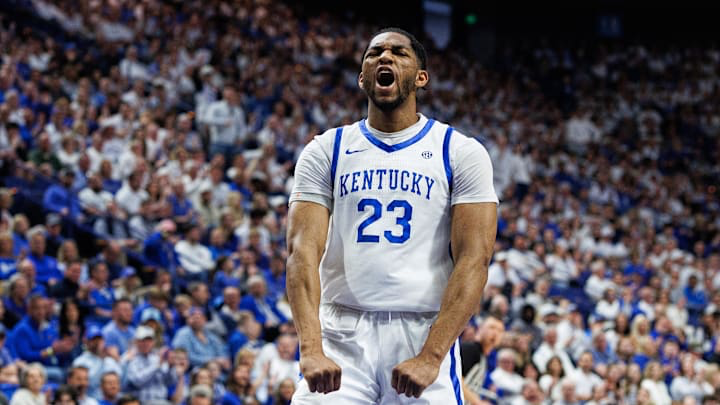
Kentucky’s season was full of promise for a hot second, until it fell flat on its face after several key injuries and an avalanche of disappointing L’s. The Wildcats went 7 and 11 vs. tournament-bound squads, which is a tough pill to swallow for one of the most expensive rosters in the country. Mark Pope’s team will be fortunate to survive their Friday matchup against Santa Clara.
North Carolina
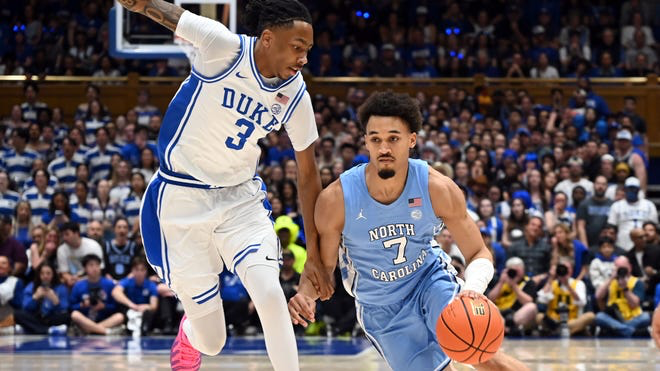
Hubert Davis’ seat was getting toasty heading into this season, fresh off a lackluster year that sputtered towards a first-round defeat last March. To his credit, things were different for a while this year. The Tar Heels soldiered on to a 13-1 start before gradually fading once the calendar turned to 2026. Much of this can be explained away by the unfortunate injury to their star freshman forward, Caleb Wilson. Wilson, a generational talent, will be long gone by the time next season begins. In the meantime, I’m worried how their guards will fare vs. a feisty VCU team on Thursday.
UCF
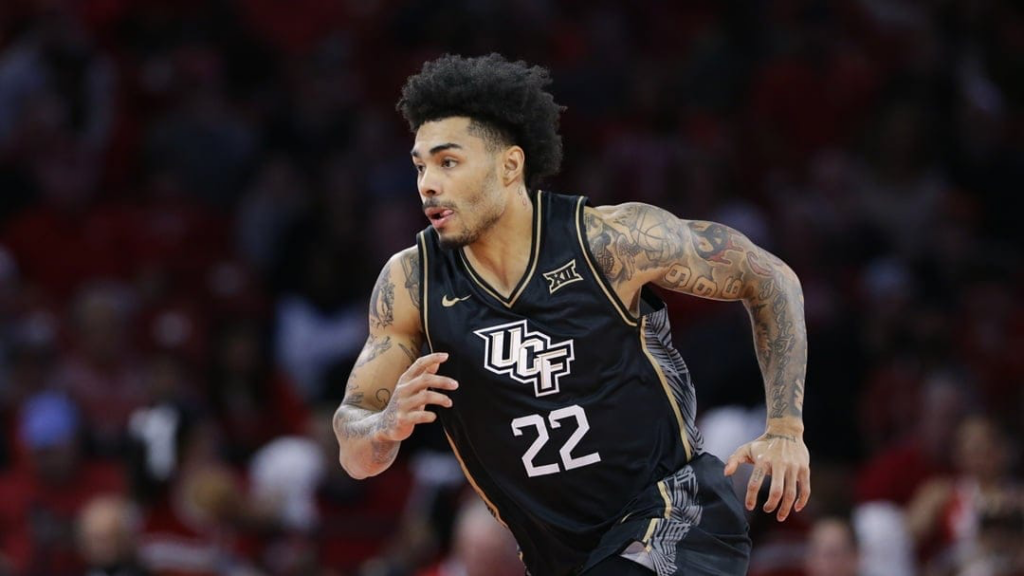
UCF strung together a handful of impressive wins this season against the likes of tournament-bound Texas A&M, Kansas, Texas Tech, TCU, and BYU, but they never exhibited consistency along the way. The Knights enter the Dance having lost 4 of their last 5 and rank 17th in KenPom’s ominous “luck” metric. TL;DR — they’re toast.
Cinderellas
/sin-dr-eh-luhz/ Mid- to low-major teams who are ripe for a Sweet Sixteen run
South Florida
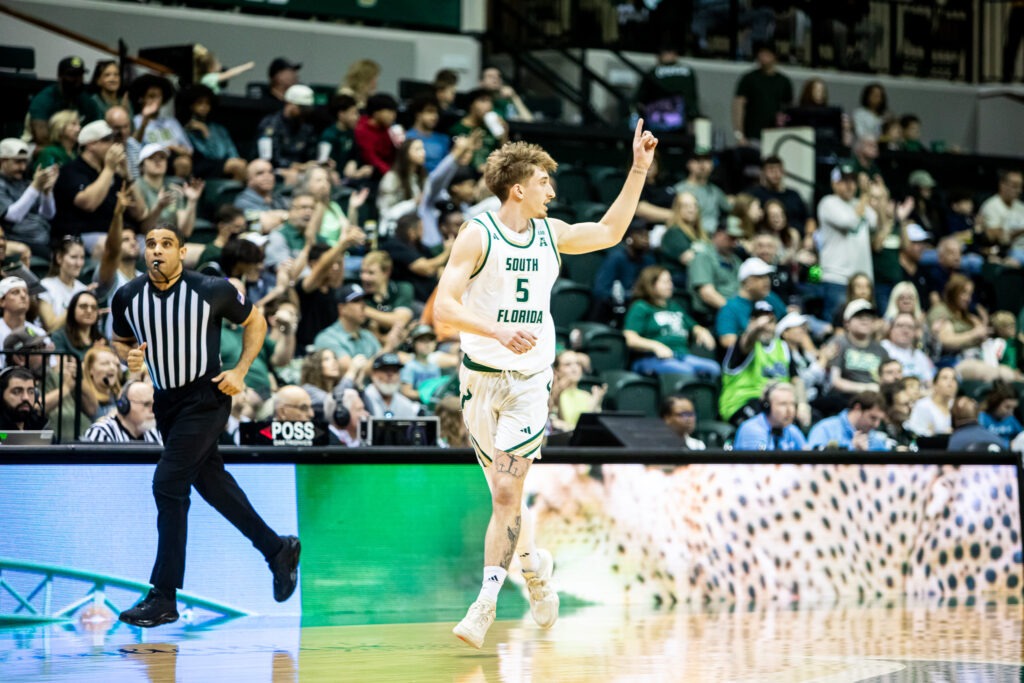
The Bulls experienced a renaissance during the 2023-2024 season when they hired former Kennesaw State coach Amir Abdur-Rahim. Fresh off guiding Kennesaw to its first ever tournament appearance, Abdur-Rahim took the reins and guided South Florida to its second ever AP ranking and its first regular season conference title in team history.
Tragedy struck the following fall when Amir passed away unexpectedly at the age of 43. The program — once resurging — was in mourning, and the team took a step back the following season with a 13-19 record. In March of 2025, USF hired Arkansas State head coach Bryan Hodgson as Abdur-Rahim’s long-term replacement. The Bull’s success this season has been nothing short of a heartfelt story, and this weekend promises another layer of emotions to the narrative. Hodgson’s father has dementia and hasn’t been able to travel to see his son coach over the past three seasons. But as fate would have it, South Florida’s first-round game is in Buffalo, NY — close to where Hodgson grew up in Western New York.
“God works in mysterious ways,” Hodgson reflected during Monday’s media availability.
Even without those wrinkles, the Bulls are an easy team to get behind. Hodgson is by all accounts a phenomenal person who challenges his squad to play by the right values. His staff tracks “blue collar” points each game to incentivize unselfish hustle. 25 wins into the season, it’s abundantly clear that his guys have built championship keystone habits.
South Florida features one of the best sharp-shooting duos in the tournament with the likes of Wes Enis (107 threes made on 36.5% from beyond the arc) and Joseph Pinion (209 threes made on 38%). And then there’s senior forward Izaiyah Nelson, the unanimous American Conference Player of the Year who leaves no prisoners amidst his plundering in the paint. Nelson averages nearly 16 points and 10 rebounds and bullies opposing offenses to the tune of 1.6 steals and 1.4 blocks per contest.
This team can flat out score. USF averages 87 points per game (6th) and sinks the most free throws (20.1) of any team in the country. They’re also 4th in rebounds, 23rd in average scoring margin, and 28th in assists. On the defensive end, the Bulls hold opponents to 46% shooting from inside the arc (25th) and force 14 turnovers per game (23rd). Sure looks like Cinderella to me.
Akron
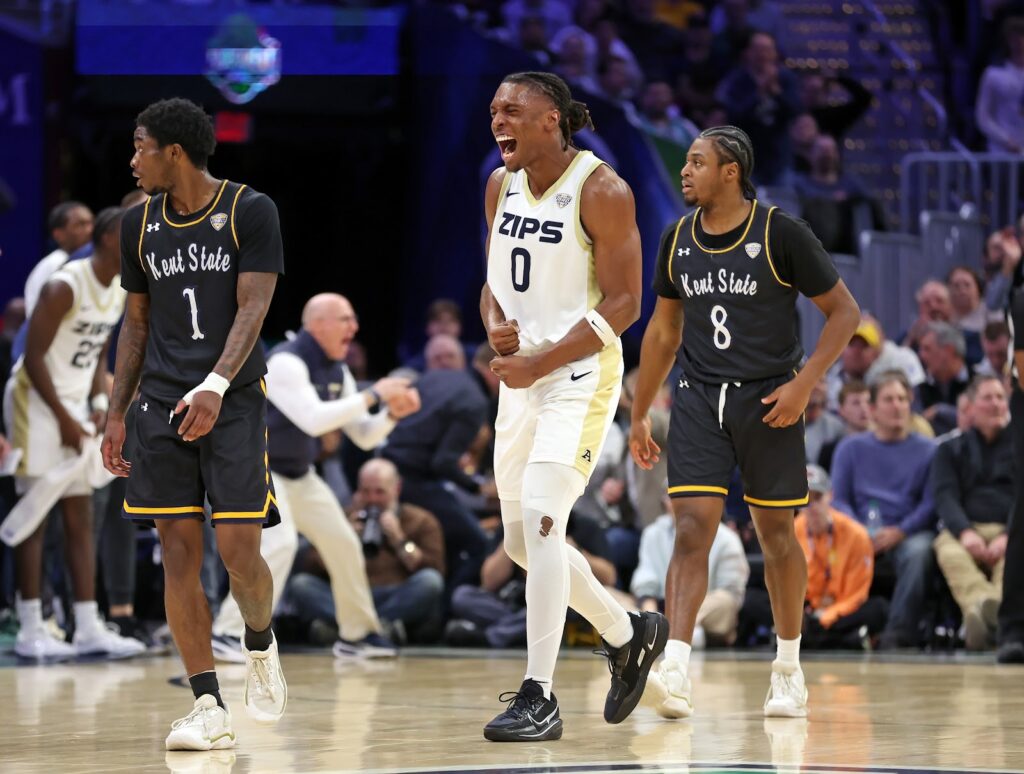
The slipper might just fit the Zips. Akron was often overshadowed by Miami Ohio’s MAC conference dominance, but they outpaced the Redhawks in just about every predictive metric. The Zips average over 88 points per game (7th) and are comparably elite across free throw shooting (17th), effective field goal percentage (8th) and 3-point percentage (18th). Senior guard Tavari Johnson is the name to know — Akron’s offense operates in the 98th percentile when Johnson is on the floor, as he’s good for 20 points, 3 rebounds, 5 assists, and 1.3 steals a game on 37% from three and an eminent 87% from the line.
Akron’s résumé is respectable but not gaudy. They own zero Quad 1 and 2 wins to their name but they took care of business (27-1) in Quads 3 and 4. Notable victories include Princeton by a million (104-69), on the road vs Tulane by 17, at Ohio by 21, and at Kent State by 22. Meanwhile, they lost by 18 to Purdue, 3 to Yale, and 3 to Miami Ohio.
Throwing all of the stats and metrics out the window: this team passes the eye test. They move the ball with purpose, run their sets with controlled aggression, and consistently act on the right instincts when the action breaks script. Tavari Johnson is a cold-blooded killer; everyone’s been warned.
Utah State
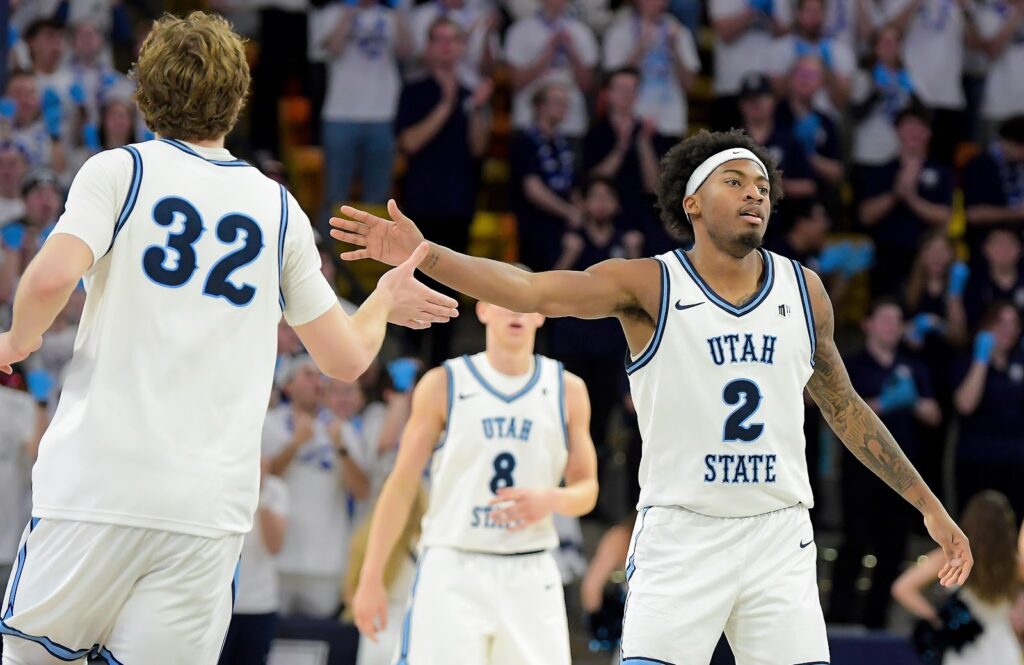
Utah State has sneakily been one of the steadiest programs over the past decade. The Aggies finished 28-6, 26-8, 20-9, 18-16, 26-9, 27-5, and 26-8 in each of the past seven seasons despite having three different coaches at the helm. In his second year on the job Jerrod Calhoun has assembled the program’s best roster since the 2019-2020 Covid-year team that featured NBA talents Sam Merrill and Neemias Queta.
Utah State is a well-oiled machine on offense, led by Mountain West Player of the Year Mason Falslev (16 points, 6 rebounds, and 3 assists on 41% from three), senior floor general MJ Collins (18 points, 2.4 rebounds, 1.6 assists on 41% from three and 82% from the stripe), and unsung junior Karson Templin (9 points, 4 rebounds, 1 assist, 1 steal, 1 block on 35% from three). The Aggies rank 14th ineffective field goal percentage, 11th in two-point percentage and 15th in steals per game.
Calhoun’s deep, 10-man rotation brims with balance; when they’re clicking it’s been a sight to behold. I see them blowing the doors off of Villanova and even giving Arizona a scare in Round 2.
Saint Louis
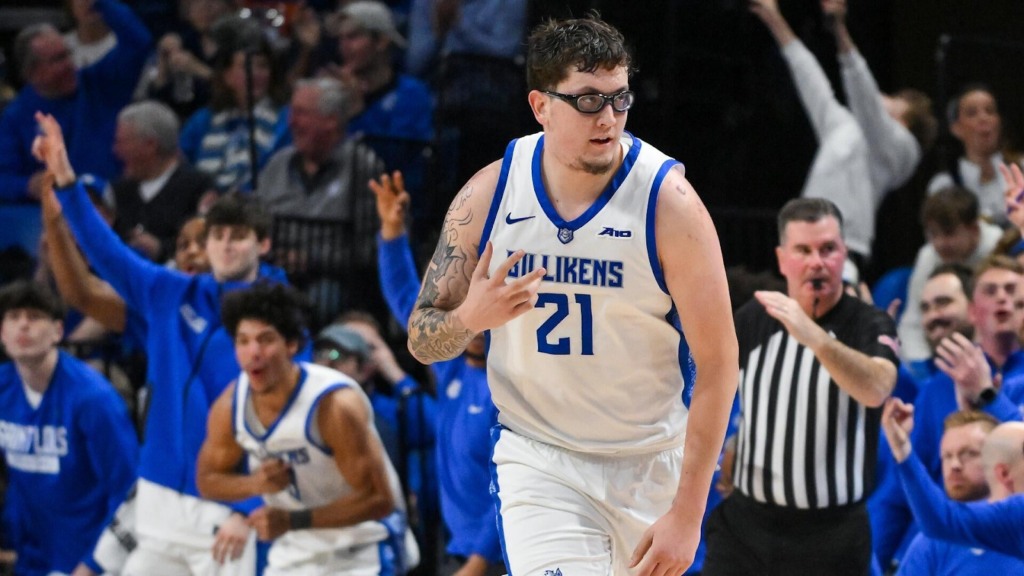
The Billikens might be the streakiest team in the field. On one hand, this makes them vulnerable to a large deficit; on the other, they’re capable of climbing out of just about any hole they dig themselves into, as evidenced by their recent 21-point comeback vs. George Washington in the A-10 tournament and their #2 ranking in 2nd half scoring margin.
SLU spotlights four 1,000 point scorers, including Trae Green, the best shooter in the nation off the dribble, and Robbie Avila, the best passing center in the field. Josh Schertz’ team are masters at driving and cutting on the opposite side of the floor, and their #1 true shooting percentage ranking is proof of the space they can create in the process.
To say the Billikens are intentional with their shot-selection would be an understatement: they take 86% of their shots from the post or from three — also first in the nation — and clock in at 6th in points per game. SLU does more than hold their own on the defensive end of the floor, too: they boast the 2nd best defensive field goal percentage and are lethal in transition offense going the other way. They won’t go down without a fight.
Miami Ohio
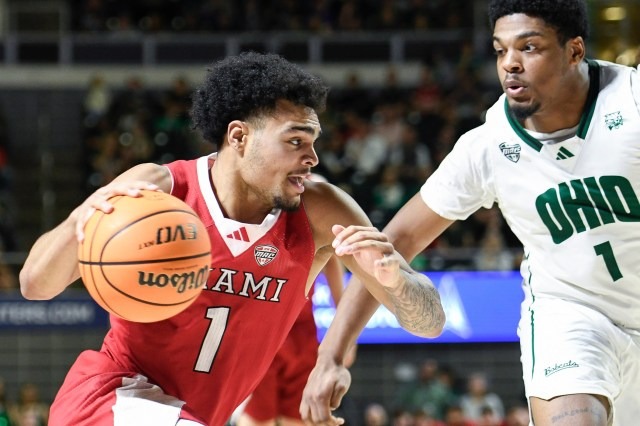
What a ride it’s been for Miami Ohio, as they were the only undefeated team in the nation until their conference tournament loss last week. Travis Steele’s Redhawks enter the fold as the best scoring offense in the country. They’re #1 in true shooting percentage and three point percentage, and 9th in points per game.
That being said, they’re also highly deficient on the defensive end and accumulated more road wins by 3 points or fewer than any other team in the country. Wednesday’s play-in game vs. SMU will reveal what they’re made of, one way or another.
VCU
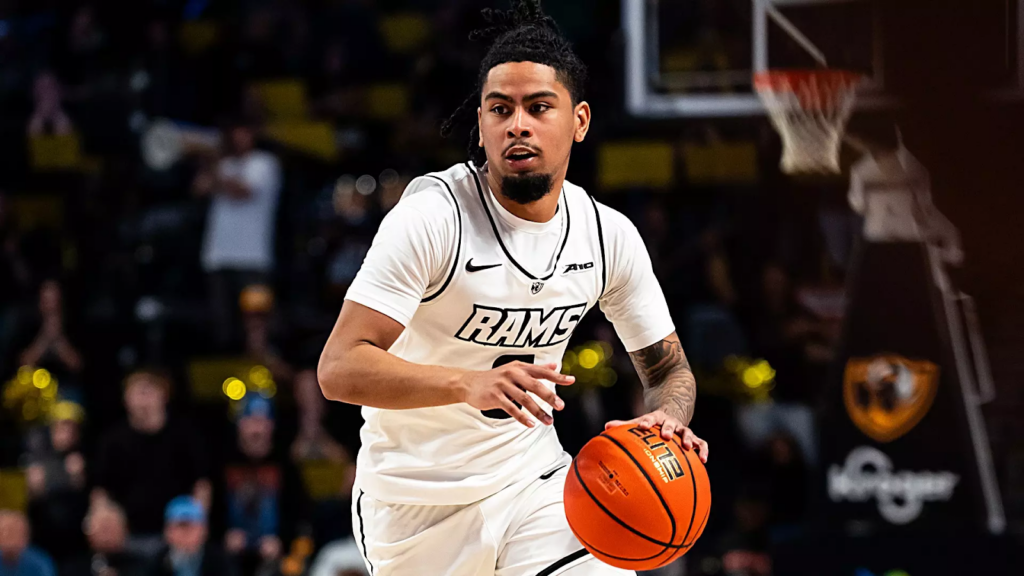
There’s a lot to like about Phil Martelli Jr.’s Rams. VCU resembles Utah State in the sense that they’ve been a steady program across several coaching tenures. Martelli Jr. took the helm by way of Bryant, whom he molded into an America East powerhouse to the tune of back-to-back 20 win seasons and a tournament berth last year. This season, his team possesses superb positional strength, versatility and balance across the board. Seven guys log over 20 minutes per contest and notch at least 7 points per game, and eight players shoot north of 35% from three.
Guard Terrence Hill Jr (14 points, 2.5 rebounds, 2.8 assists) and forward Lazar Djokovic (13.5 points, 5.4 rebounds, 1 assist) are the go-to guys who complement each other through a formidable inside-out flow. The Rams aren’t as reliable on defense, but frankly that hasn’t mattered lately: VCU has tallied just one loss to its name since mid-January. These guys have the size and depth to make North Carolina uncomfortable.
Santa Clara
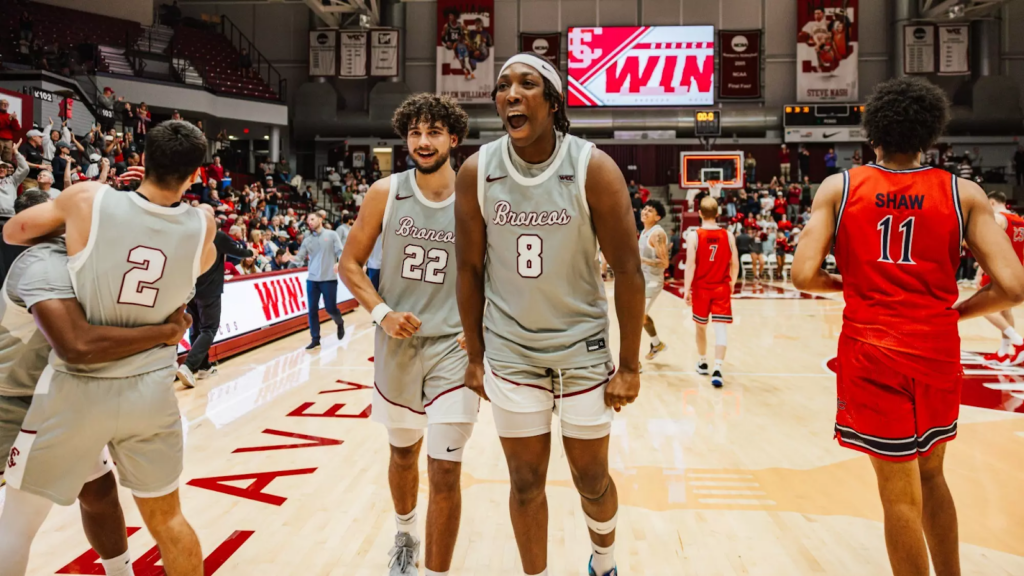
The Broncos had been knocking on the tournament door in each of the past two seasons; this year, they finally kicked it down. Santa Clara is an elite shooting team that plays hard from the first whistle to the final buzzer. An offense-first team, SCU owned the fastest pace of play in their conference, notched the 29th most points per game in the nation, and grabbed the 20th highest percentage of offensive rebounds. Defensively, Santa Clara subsists on turnovers (26th) as a means of generating fast breaks. Kentucky could be vulnerable against them in a shoot-out.
Saint Mary’s
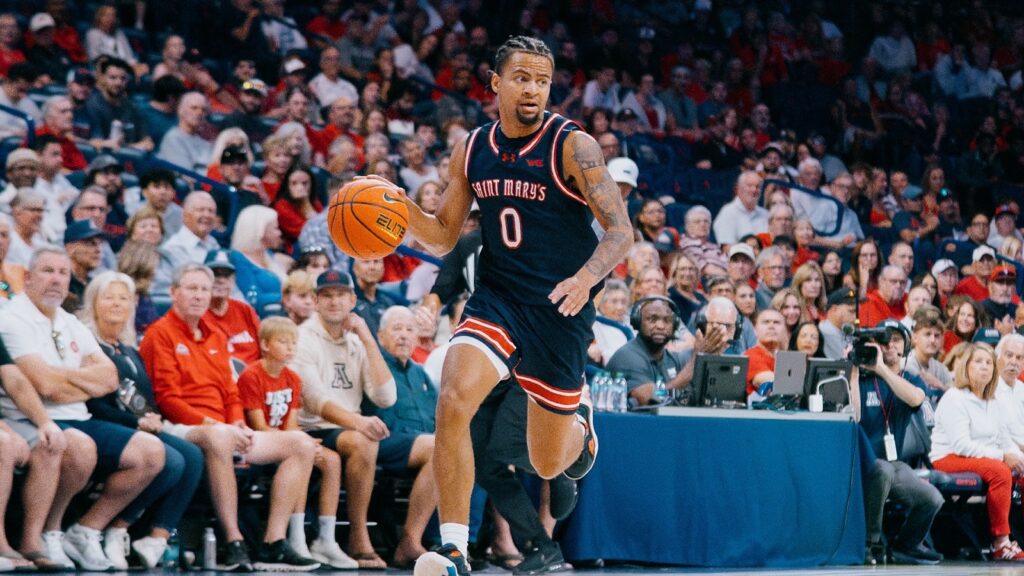
Ho hum, another Gaels team is dancing in March. Randy Bennett leads Saint Mary’s to their fourth consecutive tournament appearance; is he the best coach no one talks about?
Nearly everything about SMU’s statistics screams “well-coached team.” They rank 14th in average scoring margin, 13th in rebounds, and 10th in points allowed. They’re also the #1 free-throw shooting team in the nation and sink 39% of their threes (13th in the country). Further proof of their coaches’ prowess is that, year-over-year, he keeps losing key cogs but their record never dips: The Gaels clinched a share of the WCC regular season title for the third year running.
Saint Mary’s is far from flashy — they clock in at one of the slowest paces among all tournament teams — but they’ll grind you to a pulp until the kill shot presents itself. Lithuanian forward Paulius Murauskas could become a household name by the end of the first weekend, thanks to his prolific scoring (19 points per game), commitment to rebounding (8 per game), and guard-like ball skills.
High Point
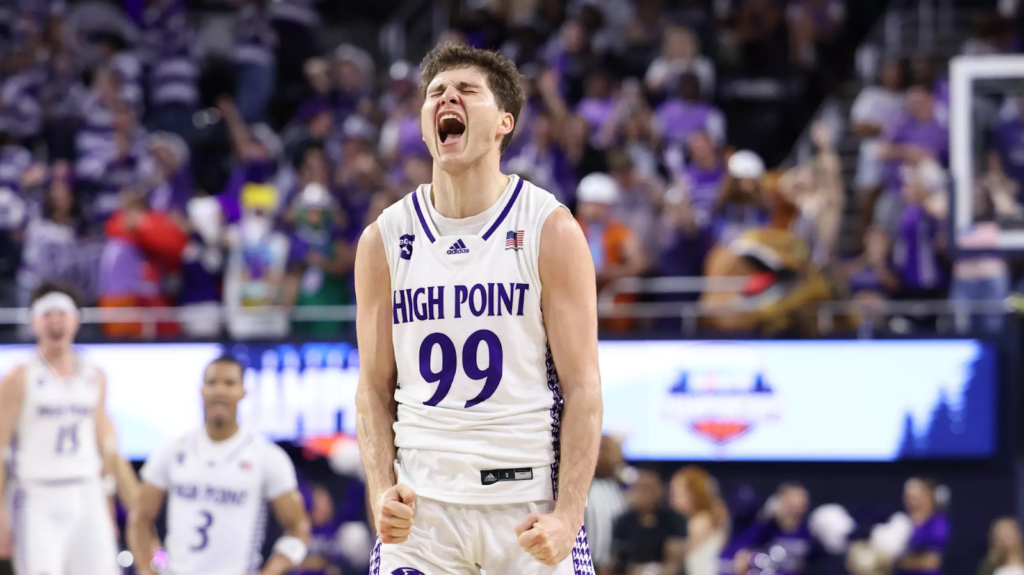
High Point is going dancing for the second straight season. Prior to last year, they had never been there before. The Panthers enter the fray owning the nation’s longest win streak at 14 games. They score north of 86 points per game (10th) and own the 8th best scoring margin, in large part due to the ability to take excellent care of the ball while forcing their opponent to do the opposite — on offense, High Point turns the ball over 11.2% per play (good for 7th best) whereas on defense, they force their opponents to cough it up 19% of the time (5th best).
To be fair, Wisconsin is a much better team than anyone the Panthers have had to play this season (246th strength of schedule). If they can keep it close at the half, High Point could hang in there ‘til the bitter end.
Fantastic writeup! Well-written and thorough.